Why Is My Upstairs So Much Hotter Than Downstairs? (7 Real Causes & Fixes)
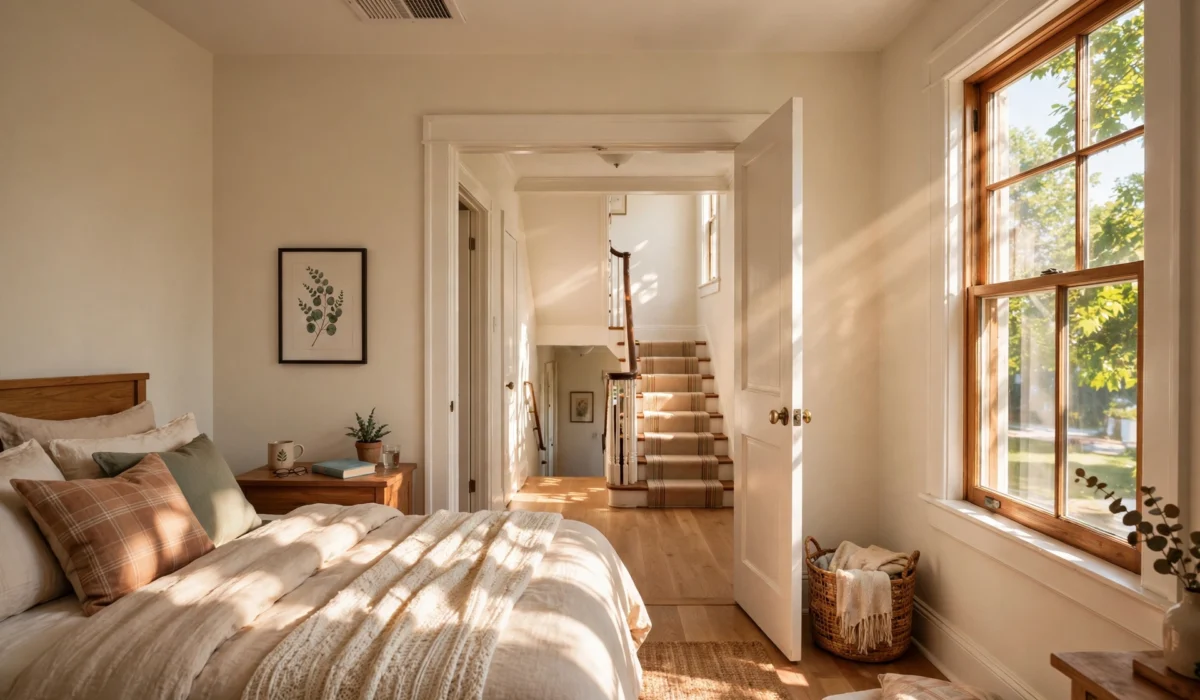
If you have ever walked upstairs on a summer evening and felt like you entered a different climate, you are not imagining it. The question of why is my upstairs hotter than downstairs is one of the most common complaints in two-story homes, and a small difference is perfectly normal. But when the gap reaches 8, 10, or even 15 degrees, something in your home is working against you. The good news is that most causes are fixable, and many of them do not require a new air conditioner.
In this guide, we will walk through the real reasons your upstairs runs hot, how to tell which one is affecting your home, and the fixes that actually work, starting with the cheapest and simplest. You will also learn when it is time to call an HVAC professional instead of tackling it yourself.
How Much Hotter Should Upstairs Be?
Physics is part of the story. Warm air rises, so the upper floor of any two-story home will naturally run a little warmer than the ground floor. In a well-built, well-balanced home, that difference should be just 2 to 4 degrees. If your thermostat downstairs reads 72 degrees and your bedroom reads 74 or 75, that is normal and not worth worrying about.
A gap of 5 degrees or more, however, is a sign that your cooling system, ductwork, insulation, or attic is not doing its job. It also means your air conditioner is probably running longer and harder than it should, which shows up on your energy bill. The goal is not a perfectly equal temperature in every room. It is a gap small enough that every room feels comfortable.
Why Is My Upstairs Hotter Than Downstairs? 7 Real Causes
Most hot-upstairs problems come down to one of seven causes. Often, two or three are working together. Work through them in order, and you will usually find your answer before you reach the end of the list.
1. Hot Air Rises, and Your Home Lets It
This is the baseline cause, and it is made worse by open stairwells, tall ceilings, and leaky ductwork. Warm air from the ground floor drifts upstairs, while the cool air your system produces sinks back down. Without good air circulation, the upstairs simply collects heat all day long.
What helps: keep interior doors open where you can, run your ceiling fans counterclockwise in summer so they push cool air down, and set your HVAC fan to “on” or “circulate” for a few hours in the evening. This alone can shave a couple of degrees off the upstairs temperature.
2. Your Attic Is Cooking Your Upstairs Ceiling
On a sunny summer day, an attic can reach 130 to 150 degrees. If your attic insulation is thin, compressed, or missing in spots, that heat radiates straight through the ceiling into your upstairs rooms. This is the single biggest cause of a hot upstairs in older homes, and it is also one of the most rewarding fixes.
Check your attic insulation depth. In most of the United States, the Department of Energy recommends attic insulation of R-38 to R-60, which is roughly 12 to 16 inches of fiberglass batts or blown-in insulation. If you can see the tops of your ceiling joists, you do not have enough. Adding insulation is messy work, but it pays for itself in comfort and lower bills, and it helps in winter too.
Attic ventilation matters as well. Soffit vents should bring cool air in low, and ridge or roof vents should let hot air out high. If your soffit vents are blocked by insulation, the attic cannot breathe, and the heat has nowhere to go. For a primer on sealing and insulating properly, see the U.S. Department of Energy guidance on air sealing your home and insulation levels.
3. Leaky or Poorly Designed Ductwork
Your air conditioner may be producing plenty of cold air, but if the ducts serving the upstairs leak, that air never arrives. Duct leaks in attics and wall cavities are extremely common, and they are worse upstairs because the duct runs are longer and pass through the hottest spaces in the house.
Signs of duct problems include weak airflow from upstairs vents, rooms that never quite cool down even when the system runs constantly, and dusty air. A professional duct test can measure the leakage, but you can start by checking any ductwork you can see in the attic: look for disconnected joints, crushed flexible duct, and ducts that are not insulated. Sealing accessible joints with mastic sealant, not ordinary duct tape, is a solid do-it-yourself job. Just like a furnace that will not start, a cooling problem often has a simple mechanical cause, as we explain in our guide on why your furnace will not turn on.
4. Your System Is Undersized, or It Has Only One Thermostat
Many two-story homes were built with a single HVAC system and a single thermostat downstairs. The thermostat is satisfied at 72 degrees, so the system shuts off, while the upstairs is still 80. The system is not necessarily broken. It simply cannot see the upstairs temperature.
Short-term fixes include closing ground-floor supply vents partway (never fully) to push more air upstairs, and using a smart thermostat with remote room sensors placed upstairs. The sensors let the system average the upstairs temperature or prioritize it at night. If you are replacing a system, consider zoning: separate dampers and thermostats for each floor. Zoning costs more up front, but it is the most complete fix for a two-story home, and it can cut energy waste noticeably.
5. Blocked or Closed Vents and Dirty Filters
This is the simplest cause, and it is worth checking before you spend anything. A dirty air filter restricts airflow to the whole system, and the farthest rooms, usually upstairs bedrooms, suffer first. Check your filter monthly in summer and replace it when it looks gray or clogged.
Also walk through the upstairs and make sure every supply vent is open and unblocked by furniture, rugs, or curtains. Closing vents in unused rooms sounds logical, but it raises pressure in the duct system and can actually reduce airflow where you need it. If you recently had work done on the house, check that no vent was accidentally covered or painted shut.
6. Sun, Windows, and a Hot Roof
South- and west-facing upstairs rooms take the brunt of afternoon sun, and older single-pane or poorly sealed windows make it worse. A dark roof absorbs even more heat. You can test this easily: if the hottest rooms are the ones facing the afternoon sun, solar gain is a major part of your problem.
Practical fixes, in order of cost:
- Close blinds or curtains on sun-facing upstairs windows during the afternoon, and consider reflective window film.
- Plant shade or install exterior shading, such as awnings, on the hottest side of the house.
- Check window seals and weatherstripping, and add caulk where you feel drafts.
- When replacing windows, choose low-E glass, which blocks much of the sun’s heat while letting light in.
Solar gain is also why a musty or damp upstairs can feel even worse in summer, since warm, humid air lingers. If your home also smells damp when it rains, read our guide on why your house smells musty when it rains to rule out a moisture problem at the same time.
7. Poor Air Circulation and a Stuffy Layout
Some upstairs layouts simply trap air. Long hallways with a single vent, bedrooms at the end of a duct run, and a closed-off stairwell all create pockets of warm, still air. The system may be fine, but the air is not moving.
Try this test: hold a tissue near an upstairs vent while the system runs. If it barely moves, airflow is the issue. If it moves well but the air is not cool, the problem is more likely duct leakage or insulation. For circulation, a small duct booster fan, a whole-house fan used on cool evenings, or even a portable fan in the hallway can make a real difference. Keep bedroom doors open during the day so return air can flow back to the system.
Why Is My Upstairs Hotter Than Downstairs in Summer but Fine in Winter?
If the problem shows up only in summer, the cause is usually heat gain from the attic and roof, solar gain through windows, or an air conditioner that cannot keep up with the upstairs load. In winter, the same home may feel fine upstairs because heat rises and helps the upper floor, masking the insulation and duct problems.
That seasonal pattern is actually useful information. It points you toward attic insulation, ventilation, and window shading first, rather than toward a furnace or duct replacement. Fix the summer heat-gain problems, and the winter will usually take care of itself.
Quick Fixes vs. Long-Term Fixes
Not every fix costs the same, and you do not need to do them all at once. Start with the free and cheap steps, measure the difference for a week, and then decide whether a bigger investment is still needed.
| Fix | Typical Cost | Best For | How Much It Helps |
|---|---|---|---|
| Replace filter, open vents, run fans | Free to $30 | Weak airflow, stuffy rooms | 1–3 degrees |
| Smart thermostat with upstairs sensors | $150–$300 | Single-thermostat homes | 2–5 degrees at night |
| Seal accessible duct joints | $50–$200 DIY | Leaky attic ducts | 2–4 degrees |
| Add attic insulation | $1,000–$2,500 | Thin or missing insulation | 3–8 degrees |
| HVAC zoning (two zones) | $2,000–$4,500 | Chronic large gaps | Near-equal temperatures |
| New right-sized system | $6,000–$12,000 | Old or undersized equipment | Solves capacity problems |
Costs vary widely by region and home size, so treat these as planning ranges, not quotes. Always get two or three written estimates for the larger jobs.
A Simple 30-Minute Diagnostic You Can Do Today
Before you call anyone, run this quick check. It will tell a technician exactly where to look, and it may reveal a fix you can do yourself.
- Measure the gap: place a thermometer in an upstairs bedroom and note the downstairs thermostat reading at the same time, morning and evening.
- Check the filter: pull it out and hold it up to the light. If you cannot see light through it, replace it.
- Feel the vents: compare airflow upstairs and downstairs while the system runs. Note any vents with almost no air.
- Peek in the attic: if it is safe to do so, check insulation depth and look for blocked soffit vents. Do not walk on the ceiling drywall.
- Note the pattern: which rooms are hottest, and at what time of day? Sun-facing rooms in the afternoon point to solar gain; all upstairs rooms all day point to ducts or insulation.
Write down what you find. A technician who hears “upstairs is 9 degrees hotter, vents on the east side barely blow, and the attic insulation is about 6 inches deep” can diagnose the problem far faster than one who hears only “it is hot upstairs.” Staying on top of checks like these is easier with a routine, so keep our home maintenance checklist handy for seasonal tasks, including filter changes and gutter cleaning. Clogged gutters can even add moisture problems around the house, so if you are unsure about timing, see how often you should clean your gutters.
When to Call an HVAC Professional
Call a professional if the temperature gap stays above 5 degrees after you have replaced the filter, opened the vents, and checked the obvious items, or if you notice any of these warning signs: refrigerant lines icing up, a system that runs constantly without cooling, burning smells, loud banging from the ductwork, or water leaking around the indoor unit. Refrigerant work, electrical repairs, and duct redesign are not do-it-yourself jobs, and a reputable technician will test airflow and duct leakage rather than simply selling you a bigger unit.
Be wary of any contractor whose first answer is “you need a bigger air conditioner.” Oversized equipment short-cycles, cools unevenly, and leaves humidity behind. A proper fix starts with a load calculation and a look at your ducts and insulation, which is exactly what the Department of Energy recommends in its insulation guidance and through resources like This Old House’s insulation guides.
FAQ: Upstairs Hotter Than Downstairs
Is it normal for upstairs to be hotter than downstairs?
Yes, a difference of 2 to 4 degrees is normal because warm air rises. A gap of 5 degrees or more usually means an insulation, duct, airflow, or thermostat problem worth fixing.
Will closing downstairs vents fix a hot upstairs?
Closing downstairs vents partway can push more air upstairs, but closing them fully raises duct pressure and can damage your system. Use partial closing only, and never close more than about a quarter of your vents.
Does attic insulation really make the upstairs cooler?
Yes, in most cases it is the single most effective fix. Bringing attic insulation up to the recommended R-value can cut the upstairs temperature by several degrees and lower cooling bills at the same time.
Should I get a second air conditioner for the upstairs?
Only after checking insulation, ducts, and airflow. A second system or zoning solves the problem completely, but it is expensive, and many homes are fixed for far less once the real cause is found.
Conclusion
So, why is my upstairs hotter than downstairs? In most homes, the answer is a mix of rising warm air, a hot attic, leaky ducts, and a thermostat that cannot see the upstairs. Start with the simple checks, a clean filter, open vents, and good fan use, then work up to attic insulation and, if needed, zoning or a system upgrade. Measure the gap before and after each change, and you will know exactly what worked. A comfortable upstairs is not a luxury, and in most cases it does not require a new air conditioner, just a home that moves cool air where it belongs.
Not sure what your home needs?
Build a free, personalized maintenance plan in under 2 minutes.
Build My Home PlanRelated Articles
 HVAC & Indoor Climate
Why Does My Bathroom Fan Keep Running After I Turn It Off? (5 Real Causes & Fixes)
If your bathroom fan keeps running after you flip the switch off, don't panic. Here are the five…
 HVAC & Indoor Climate
Why Won’t My Furnace Turn On? (7 Real Causes)
There’s a specific kind of quiet that hits on the first truly cold evening of fall — when…