Why Did My Pipes Freeze When It Wasn’t That Cold Outside? (Real Causes and What to Do)
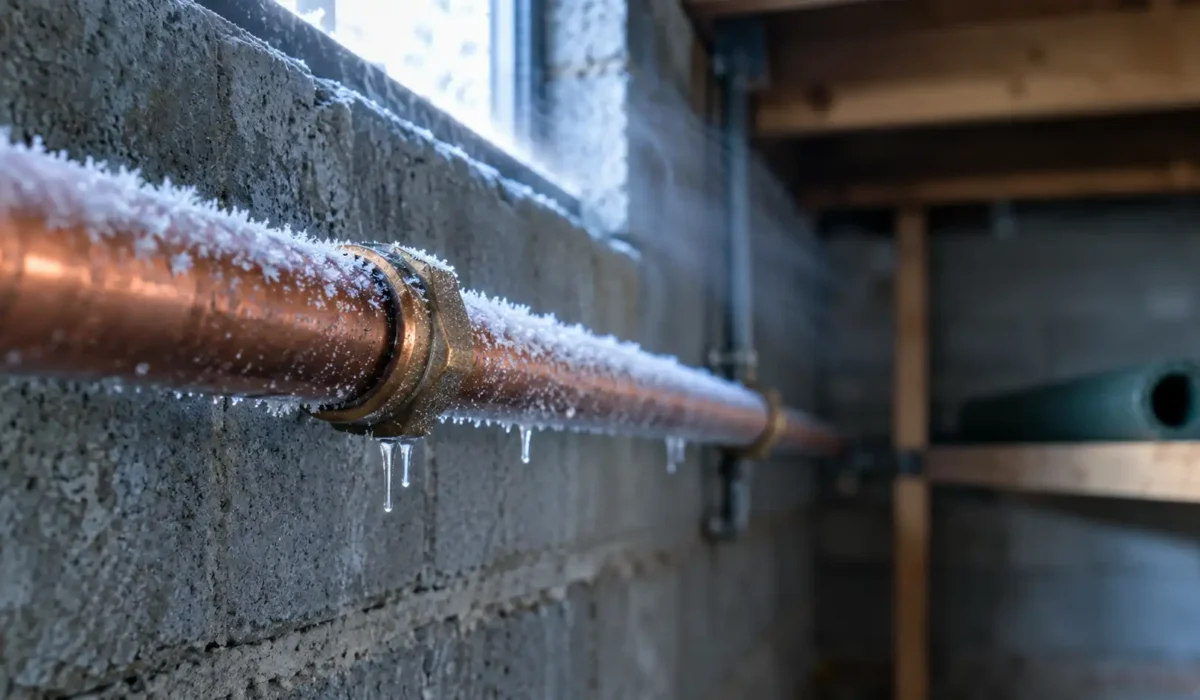
Household pipes are usually described as being at real risk once the outdoor temperature sits near 20°F for several hours, yet plenty of homeowners find frozen pipes after nights that were nowhere near that cold. If that happened to you and you are asking why did my pipes freeze when it wasn’t that cold outside, the answer rarely comes down to the forecast alone.
This guide explains why pipes can freeze at milder temperatures than expected, where the hidden cold spots in a house are, how to find the frozen section and thaw it safely, and what to change before the next cold snap. It sticks to what you can check yourself and points out where a plumber should take over.
Why did my pipes freeze when it wasn’t that cold? The outdoor number is only part of the story
Water freezes at 32°F, but the temperature on the forecast is the air temperature in the open. A pipe has its own temperature, and that depends on where it runs. A pipe inside a heated interior wall can stay well above freezing on a 25°F night, while a pipe in a drafty crawl space, an exterior wall, an attic or a garage can cool much faster.
That is why pipes can freeze at 30 degrees outside in one house and survive far colder weather in another. The 20°F figure is a rough rule, not a guarantee. Duration, insulation, airflow and pipe location can matter as much as the number. Pipes that have frozen before deserve extra attention, because they have already shown that their location is vulnerable.
It also explains the frustrating case of frozen pipes with the heat on. Your thermostat reads the air in the room, not the temperature inside a wall cavity or a crawl space. Heat moves from the warm center of the house toward the cold exterior, so a wall cavity can sit noticeably colder than the room beside it.
Why do pipes freeze on exterior walls and other hidden cold spots
Most freeze-ups happen in a short list of places. If your frozen pipe was in one of these, that alone may explain it.
Exterior wall cavities
Supply pipes run against uninsulated outside walls, sometimes right under a leaky window. A kitchen or bath at a building corner has two exterior walls and loses heat faster.
Under-sink cabinets
Closed cabinet doors keep warm room air away from the pipes. The doors do not cause the freeze, but they cut off the heat that was protecting the pipes.
Crawl spaces, garages and basements
Unheated spaces can behave like outdoor air, especially when vents are open or doors are drafty.
Attics
Pipes in attics sit above the insulation, on the cold side, with little heat reaching them.
Holes in the wall
Gaps where cable, wires, a dryer vent or a range hood pass through the wall can let a thin stream of freezing air blow onto a nearby pipe.
This is also the usual reason kitchen pipes freeze but not the rest of the house. The kitchen sink is often on an exterior wall, while bathrooms and other fixtures are on interior walls where it stays warmer.
A pattern from my research
Reading through homeowner forum threads about frozen pipes, one pattern kept coming up. The pipes that froze were rarely in the middle of the house. They ran along an outside wall, near a vent or cable hole, under a drafty window, or behind a closed sink cabinet, and several people said the same pipes had never frozen before.
That does not prove one single cause, but it fits what most prevention guides say: where a pipe runs matters more than the number on the forecast.
Frozen pipes, wind and cold air gaps: why it happened this time
If the same pipes came through earlier winters without trouble, something changed. The usual suspects are stronger wind, a longer stretch of cold, less snow on the ground, a crawl space vent left open, or a cabinet door that stayed closed.
Wind deserves a careful explanation. Sources disagree on whether wind chill itself lowers a pipe’s temperature, and strictly speaking it does not change the air temperature. What wind does is push cold air through every small gap in siding, foundation walls and vents, and strip heat from exposed pipes. Insulation that is not sealed does little good if wind can blow behind it. Can an open crawl space vent freeze pipes? On a windy night, yes, it can.
Snow can matter too. One restoration company points out that snow acts like a blanket against the base of a house, so in a winter with little snow, more cold air reaches the foundation and rooflines. That is one reason pipes freeze when there is no snow, even though you might expect the opposite.
How to tell which pipe is frozen and thaw it safely
The first sign is usually a faucet that gives only a trickle or nothing at all. A pipe that looks white or fuzzy on the outside may be freezing inside. To narrow it down, check which fixtures are affected. If only the kitchen cold tap is dead, look near the sink and the exterior wall behind it. If every fixture is affected, the freeze is probably closer to where the water enters the house.
- Find your main water shutoff before you do anything else, so you can close it quickly if a pipe leaks.
- Open the faucet nearest to the frozen section. This lets water and steam escape as the ice melts.
- Warm the area gently. Open the cabinet doors, use a hair dryer on a moderate setting or warm towels, and work from the faucet side toward the frozen section.
- Keep the faucet open until normal flow returns, then check the pipe and the wall around it for drips.
| Situation | Do | Don’t |
|---|---|---|
| Heat source | Hair dryer, warm towels, warm air from open cabinets | Open flame, a torch or any fuel-burning heater |
| Faucet | Open the one nearest the freeze | Leave every tap closed while thawing |
| Space heater | Use one only while you are present, away from anything flammable | Leave it running unattended |
| After water returns | Check for leaks and know where the shutoff is | Assume the pipe is fine just because water is flowing |
Frozen pipes do not always burst, and some thaw without damage, but a crack can hide behind the ice and only leak once it melts. Call a plumber if the frozen section is inside a wall or ceiling, you cannot find it, nothing improves after a reasonable try, or water is leaking. If water is flowing where it should not, shut off the main valve first.
How to keep pipes from freezing in cold weather next time
Fall is the right time for this, before the first hard freeze. Most of the fixes are small.
- Insulate exposed hot and cold pipes in unheated spaces. If you use heat tape, choose a product approved for the purpose and follow its instructions exactly.
- Seal gaps where wires, cables, pipes and vents pass through exterior walls, using caulk or suitable insulation.
- Open the cabinet doors under sinks on exterior walls on the coldest nights, so room air reaches the pipes.
- Keep the heat on. Many guides suggest not setting it lower than about 55°F, particularly when you are away.
- On the very coldest nights, a thin trickle from a faucet served by an exposed pipe can help. It wastes water, so reserve it for the vulnerable lines.
- Check crawl space vents and garage doors for drafts, and check local guidance on whether vents should be covered in winter.
- Disconnect garden hoses and drain outdoor lines before winter.
If you are unsure which of your pipes are at risk, the Seasonal Maintenance calendar and the Maintenance Checklist list the other cold-weather jobs worth doing in the same weekend. The Maintenance Planner can build a reminder schedule for your own home, and the Home Problem Finder can help you sort out symptoms after a thaw if you suspect a leak.
Frequently asked questions
What temperature do pipes freeze in a house?
Water freezes at 32°F, but pipes become much more vulnerable when outdoor temperatures stay near 20°F or below for several hours. Exposed pipes can freeze sooner, while well-insulated pipes inside heated areas may stay safe during the same cold spell. Can pipes freeze at 32 degrees?
They can if a pipe sits in a cold, drafty spot such as an exterior wall or an open crawl space. A single reading of 30°F does not mean every pipe in a house will freeze, but one exposed pipe can. Does wind make pipes freeze?
Wind does not lower the air temperature, but it pushes cold air through gaps and pulls heat away from exposed pipes. Insulation that is not sealed against wind can lose most of its benefit. Should I open cabinet doors to keep pipes from freezing?
Yes, on very cold nights, especially for sinks on exterior walls. Opening the doors lets warm room air reach pipes that would otherwise be shut off from the heat. How do I thaw frozen pipes safely?
Open the nearest faucet, then warm the pipe gently from the faucet side with a hair dryer or warm towels. Never use an open flame, a torch or a fuel-burning heater, and call a plumber if the pipe is inside a wall or leaking.
Before the next cold night
Most frozen-pipe stories start the same way: a pipe in a spot nobody thought about, on a night nobody thought was cold enough.
Which pipe in your house runs along an outside wall, and have you ever looked at what actually sits between it and the cold?
Not sure what your home needs?
Build a free, personalized maintenance plan in under 2 minutes.
Build My Home PlanRelated Articles
 Plumbing
Why Does My Toilet Water Level Drop in Cold Weather? (Wind, Frozen Vent and Other Causes)
It is early morning, the wind is rattling the gutters, and the water in the toilet bowl sits…
 Plumbing
Why Is My Water Pressure Low in Only One Faucet? (Real Causes)
Is it just the kitchen sink, or has the whole house gone weak? That one question is usually…