Why Do My Lights Dim When the Furnace Turns On? (Normal vs. Warning Sign)
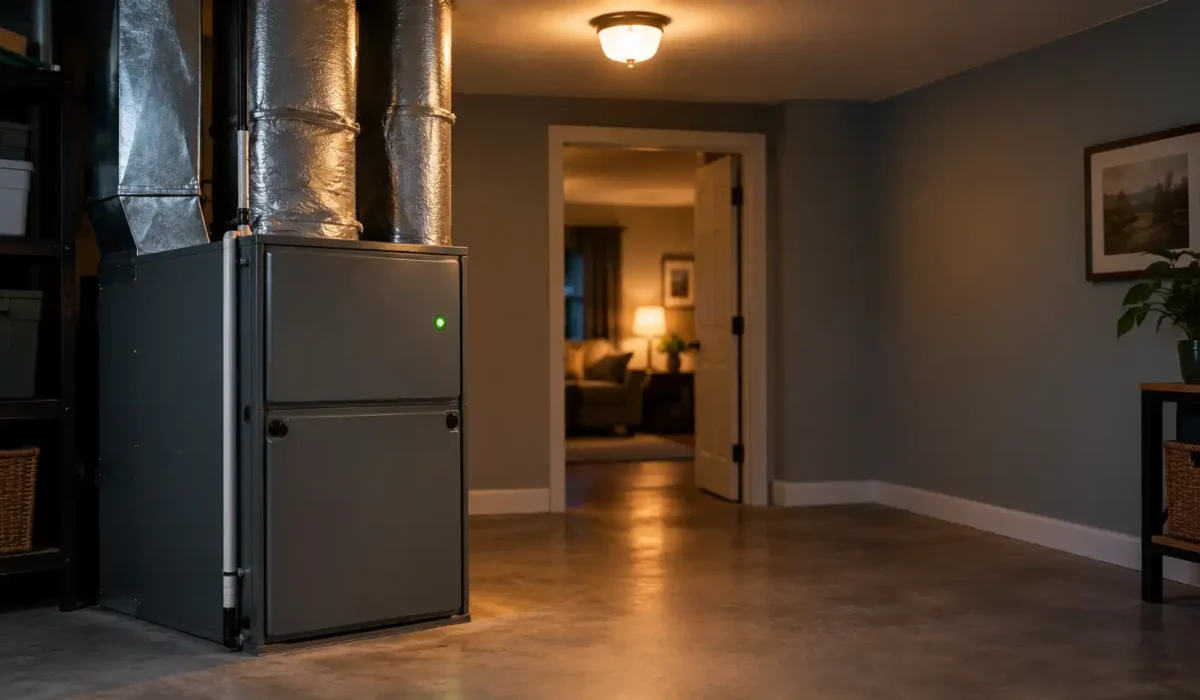
Does it happen for about a second, right when the furnace starts, and then everything goes back to normal? If you keep asking yourself why do my lights dim when the furnace turns on, you are in good company, and the honest answer is that it is often harmless, but not always.
This guide explains what is happening electrically in plain language, how to tell a normal dip from a warning sign, what you can safely check yourself, and when to call an electrician, a heating technician or the utility company. It never asks you to open a panel or touch wiring, because that work belongs to licensed professionals.
Lights dim when furnace kicks on: what is actually happening
A furnace is built around motors. The blower fan moves air through your ducts, and many gas furnaces also have a smaller inducer motor that pulls exhaust out. Electric motors draw far more current for a moment while they spin up than they do once they are running. That brief surge is called inrush current.
The surge pulls the voltage in your wiring down slightly, and a bulb shows that as a quick dim. With an electric furnace the effect can be bigger, because the heating elements switch on first and the blower follows, and the lights can dim when the electric furnace heating elements turn on as well as when the fan starts.
The dip is more noticeable if the furnace and the lights share a breaker, or if the wiring feeding the furnace is undersized. HVAC sources generally treat dimming of less than a second, with no effect on other appliances, as a normal start-up voltage drop. When the lights dim only when the furnace starts but not when other appliances run, the cause usually sits with the furnace motor and its circuit rather than the whole house.
Is it normal for lights to dim when the furnace starts? From normal to urgent
The most useful way to judge the situation is by stages. The more widespread and the longer-lasting the symptom, the less likely it is to be a simple motor surge.
| Stage | What you notice | What it likely means | What to do |
|---|---|---|---|
| 1. Brief dip | Lights dim for under a second, then return to normal; other appliances seem unaffected | Normal motor start-up voltage drop | No repair needed. Mention it at your next furnace service |
| 2. Getting worse | The dip is deeper, lasts longer, or has grown over several winters | Possible loose connection, undersized wiring, or an aging motor or capacitor | Book an electrician or heating technician to check |
| 3. Whole-house flicker | All the lights in my house dim when the furnace turns on, and in step with other small appliances too | A problem upstream of your fixtures, such as the panel, the service connection or the utility side | Call an electrician soon; call the utility if neighbors notice it too |
| 4. Warning signs | Some lights dim while others get brighter, or flickering comes with buzzing at the panel, a burning smell or warm cover plates | Possible loose or lost neutral, or a hot connection, which is a safety risk | Treat as urgent. Stay away from the panel and call the utility or an electrician right away |
Why LED lights flicker more when the furnace kicks on
If you recently switched to LED bulbs, the dimming may feel new even though the wiring has not changed. LEDs react quickly to small voltage changes, and cheaper ones tend to react more. Some LED flicker also comes from bulbs paired with dimmer switches that are not rated for LEDs.
That is the practical answer to why LED lights flicker when the furnace kicks on. A flicker that shows up in just one fixture, or only in the fixtures with dimmers, points to the bulb or the dimmer. A dip that shows up across many fixtures points to the wiring or supply.
What I noticed while comparing sources
The sources I read disagree on emphasis. One forum poster blamed LED bulbs for most cases of this kind. Electricians writing about panels and service connections stressed loose connections instead.
Both can be true in different houses. The simplest way to separate them is to note whether the dip appears in one fixture or in many.
When dimming lights point to a loose connection or a bad blower motor
Two different problems can hide behind the same symptom. One is electrical, and the other is in the furnace itself.
On the electrical side, a connection that has worked loose at a breaker or at the main service can heat up under load. One electrician described a case where a loose conductor on a breaker had overheated and melted its insulation, and the owner had only noticed lights dimming. Loose panel connections are not a do-it-yourself repair, and they can be a genuine fire risk, so dimming lights furnace complaints in older homes with aging panels deserve a professional look. Older wiring may also struggle with modern loads.
If some lights get dimmer while others get brighter, the pattern can point to a compromised neutral connection between the panel and the utility transformer. A reputable building publication describes that as an immediate danger, because appliances can see much higher voltage than normal. Most utilities respond quickly when you describe that pattern.
On the furnace side, the question many people ask is whether a bad furnace capacitor can make lights dim. It can, indirectly. A weak capacitor or a failing blower motor may draw more current as it struggles to start. Clues include a buzzing motor, a blower that spins up slowly, or error codes on the control board. That is a job for a heating technician.
Safe checks you can do yourself
None of these checks involve opening the panel or the furnace. They only gather information, which helps whoever you call.
- Write down what dims. Is it one fixture, one room or the whole house? Keep a short log with the date, the time and what had just started.
- Check whether other motors cause the same dip, such as the refrigerator, the air conditioner or the washing machine.
- With the power off and the bulb cool, make sure the bulb is seated firmly. Try a different LED bulb in a flickering fixture, and confirm any dimmer is rated for LEDs.
- Look and listen from a distance. Note any buzzing from the furnace or the panel, a burning smell, warm cover plates or tripped breakers.
- Watch the furnace itself. A slow start, a new noise or a blinking error light is worth reporting.
If you smell burning, see scorch marks, or hear buzzing or crackling from the panel, do not touch it. Leave the area and call emergency services or the utility. Do not wait to see whether it passes.
Who to call, and how to add this to your cold-weather routine
Electrician
Whole-house flicker, panel buzzing or heat, lights getting brighter, or any burning smell.
Heating technician
Slow blower, motor noise, error codes, or dimming that happens only when the furnace starts.
Utility company
Dimming that affects the neighborhood, a suspected neutral problem, or an unexplained dip your electrician cannot find inside the house.
A yearly furnace check before the heating season is the easiest way to catch a tired motor or capacitor early. If you want that on your calendar, the Seasonal Maintenance calendar and the Maintenance Checklist list the other cold-weather jobs worth doing in the same weekend, and the Maintenance Planner can build a reminder schedule for your own home. If you are still unsure what you are seeing, the Home Problem Finder covers common electrical warning signs.
Frequently asked questions
Is it normal for lights to dim when the furnace starts?
A brief dip of under a second is usually normal, because the furnace motor draws a surge of current when it starts. It becomes a concern when the dimming grows worse, affects the whole house, or comes with buzzing or burning smells. Why do my lights flicker when the heat comes on?
The blower and inducer motors, and in electric furnaces the heating elements, draw extra current at start-up, and bulbs show the small voltage drop that follows. LED bulbs and non-LED dimmers can make the flicker more visible. What does it mean when some lights dim and others get brighter?
It can point to a problem with the neutral connection between the panel and the utility transformer. This is considered urgent, so contact the utility or an electrician promptly instead of waiting. Can dimming lights be a fire hazard?
A brief, harmless dip is not. The risk comes from the cause behind some dimming, such as a loose connection at the panel that heats up under load. That is why worsening or widespread dimming should be inspected by a professional. Should I call an electrician if my lights dim when the furnace starts?
Call one if the dimming is getting worse, affects the whole house, or comes with buzzing, warmth or a burning smell. A short, unchanging dip may simply be worth mentioning at your next furnace service.
Picture the next cold evening when your furnace starts up. A one-second dip that you now understand is one thing, and a dip that has slowly grown deeper over the past few winters is another.
Which one does your house have, and have you ever actually written down when it happens?
Not sure what your home needs?
Build a free, personalized maintenance plan in under 2 minutes.
Build My Home PlanRelated Articles
 Electrical & Safety
Why Does My House Smell Like Fish When There’s No Fish? 7 Causes (One Is a Fire Warning)
A fishy smell with no fish in sight? Here are the 7 real causes — including one fire…
 Electrical & Safety
Why Does My Smoke Detector Beep Randomly? 7 Real Causes & Fixes
A random beep is rarely random. Here are the 7 most common causes of a chirping smoke detector…
 Electrical & Safety
Why Does My Ceiling Fan Wobble Only on High Speed? (Real Fix)
Here’s something most people don’t expect: a small amount of movement at top speed is completely normal for…