Why Does My Door Stick in Summer But Not Winter? 6 Simple Fixes That Actually Last
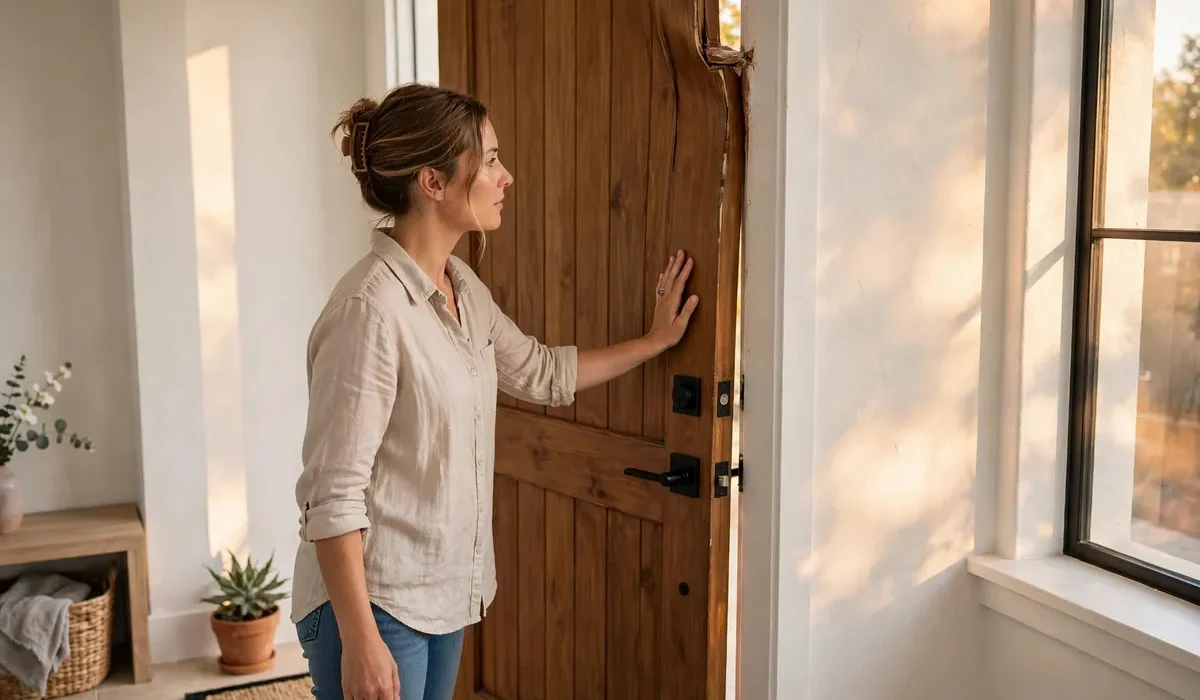
Every June the same thing happens: the front door that swung freely all winter suddenly needs a shoulder to close. If you have ever wondered why does my door stick in summer but glides fine in January, you are not imagining it. Warm, humid air changes wood’s size just enough to jam a door that fit perfectly six months ago.
⚡ Quick Answer
Why does my door stick in summer? Humid air makes the wood swell, closing the small gap between door and frame. Measure the gap first: under 3/16 inch usually means a simple hinge or strike-plate fix, while over 3/8 inch can point to a frame problem. Most cases are fixed in under an hour.
Why Does My Door Stick in Summer? The Humidity Answer
Wood absorbs moisture from the air like a sponge. In winter, heated indoor air is dry, so the wood in your door shrinks a fraction of an inch and the door swings free. In summer, warm humid air does the opposite: the door soaks up moisture, the fibers expand, and that fraction of an inch disappears. The gap between a door and its frame — called the reveal — is only about 1/8 to 3/16 inch wide, roughly a nickel’s thickness, so very little swelling closes it. That simple physics is the core of why does my door stick in summer.
Sun-facing and unsealed doors suffer worst. But swelling is only one answer to why does my door stick in summer. Hinges loosen over years of use, frames shift slightly as a house settles, and paint builds up on old doors. The fix that works depends on which cause you actually have, and a thirty-second test will tell you.
🔑 Key Takeaways
- Humidity swells wood and closes the thin gap between door and frame.
- Measure the gap first: its size points to the right repair.
- Most sticking doors are fixed with a screwdriver, not a saw.
- Never plane a door to its summer size; it will rattle loose all winter.
- A gap over 3/8 inch means checking the frame.
The 30-Second Gap Test That Tells You the Real Cause
Close the door slowly and slide a nickel into the gap at the top, the middle, and the bottom on the latch side, then do the same on the hinge side. A healthy reveal is even all the way around — about a nickel’s thickness everywhere. Where the nickel will not fit, the door is binding — the spot that answers why does my door stick in summer — and where the gap is wide, something has shifted.
Now open the door halfway and lift up on the handle. If the door moves upward or any hinge leaf wobbles, the screws are loose and the door is sagging — a common cause that has nothing to do with the weather, Next, check the latch: close the door gently and see whether the bolt lines up with the strike plate or scrapes above or below it. A latch that misses by a few millimeters feels exactly like a swollen door, and it is one more reason why does my door stick in summer has more than one honest answer.
Rule of thumb: a tight spot under 3/16 inch with an otherwise even gap means a local problem — swelling, paint, or a loose hinge — and a do-it-yourself fix will almost certainly work. If the gap is over 3/8 inch on one side and nearly closed on the other, the door or the frame is out of square, so find out why before cutting any wood.
6 Simple Fixes That Actually Last
Work through these in order, easiest first, and stop as soon as the door swings freely. Most sticking doors never need step five or six.
1. Tighten every hinge screw
Start here, always. Tighten every screw on all three hinges, on both the door and frame sides. If a screw spins without gripping, the hole is stripped: pull it out, fill the hole with a glue-dipped wood sliver, let it dry, and drive the screw back in. For a sagging door, replace one short screw in the top hinge with a 3-inch screw that reaches into the wall stud — that often lifts a drooping door back into place.
2. Lubricate the hinges and the latch
A dry hinge pin can make a door feel stuck when it is only stiff. Tap each pin upward with a hammer and a nail, pull it out, coat it lightly with petroleum jelly or silicone spray, and tap it back in. Work the lubricant in by opening and closing the door, and dab graphite on the latch bolt. A sticky latch is often mistaken for a swollen door, so this quick job answers more cases of why does my door stick in summer than most people expect.
3. Adjust the strike plate
If the latch scrapes the strike plate instead of clicking into it, loosen the plate’s screws and shift it a millimeter or two in the direction the latch needs to go. This five-minute fix solves many cases of why does my door stick in summer, because swelling moves the latch just enough to miss.
4. Sand the tight spot — lightly
Mark the binding area with a pencil while the door is closed, then sand just that spot with 80-grit sandpaper wrapped around a block, followed by 120-grit to smooth it. Take off as little wood as possible and test the fit often. Restraint matters — the door will shrink again in winter, and every millimeter you remove now becomes a drafty gap in January. That is the detail most people miss when they ask why does my door stick in summer.
5. Plane the high spot as a last resort
Remove the door from its hinges only if sanding did not work. Run a bench plane along the marked high spot in long, smooth strokes, and remove the smallest amount of wood that frees the door. Seal the freshly cut edge immediately with primer and paint — raw wood absorbs moisture faster than painted wood, so an unsealed planed edge will swell worse next summer. As Tom Silva of This Old House advises, take off the minimum — the door will shrink again in winter, which is the point most people miss when they ask why does my door stick in summer.
6. Seal every edge before next summer
The fix that prevents the problem is sealing. Wait for the driest part of the year, when the wood has shrunk back to its normal size, then coat every exposed surface — top, bottom, both sides, and the inside face — with an oil-based primer and two coats of paint. Most doors are never sealed on the top and bottom edges, and those raw edges are exactly where moisture enters. A fully sealed door still moves with the seasons, but far less.
Fix It in Summer Size, Not Winter Size
The most common mistake is fixing a door to fit perfectly in August. A door planed to swing freely at the peak of summer humidity will sit loose and drafty all winter, when the wood shrinks back and the gap grows. The right target for anyone asking why does my door stick in summer is a door that moves freely but still closes snugly — a nickel’s thickness of gap, no more. A door that binds for a fortnight and frees itself is telling you the seasons, not a defect.
When Sticking Means Something Bigger
Most summer sticking is harmless, but a few signs mean the door is not the real problem. Call a carpenter — and if the signs point to the structure, a structural engineer — if the door sticks all year round and keeps getting worse, if the gap is wider than 3/8 inch on one side, if you see cracks in the drywall above the door frame, or if several doors in the same part of the house started sticking at the same time. Those patterns point to a shifting frame or settling foundation, and no amount of planing fixes the cause. Water is the other red flag: a soft frame or peeling paint can mean a leak, not humidity, so check the gutters and flashing — the same kind of seasonal job as winterizing the outdoor faucets.
How to Keep Your Doors From Sticking Next Summer
Prevention is a once-a-year job, and late spring is the time to do it. Walk the house with a nickel and check the reveal on every exterior door. Tighten any hinge screw that has worked loose, and repaint any bare top or bottom edge before the humid months arrive. A small dehumidifier in a damp hallway or bathroom helps too. Put the check on your home maintenance checklist with the gutters and the furnace filter, and you will stop wondering why does my door stick in summer every single June.
💡 Pro Tip: Do the gap test on a dry day in late spring, and write the measurements on a sticky note inside the door frame. When the door sticks in July, you will know exactly how much it has moved.
Frequently Asked Questions
Why does my door stick in summer but not winter?
Humid summer air makes the wood in your door absorb moisture and swell, closing the thin gap between the door and its frame. In winter, dry heated air shrinks the wood back down, so the door swings freely again. Sealing the door’s edges is the best long-term fix for why does my door stick in summer.
Should I plane a door that sticks in summer?
Only as a last resort, and only a tiny amount. Plane the smallest high spot that frees the door, then seal the cut edge with primer and paint right away. Planed to fit in August, it will sit loose and drafty all winter.
How much gap should there be around a door?
About 1/8 to 3/16 inch on all sides — roughly the thickness of a nickel. An even gap all the way around means the door is hanging square. A gap wider than 3/8 inch on one side means the frame may be out of square.
Can a dehumidifier fix a sticking door?
It can help a lot, especially for interior doors in damp rooms. Lowering indoor humidity lets swollen wood dry out and shrink back over a few days. It is a good first step before sanding or planing.
So the next time your front door needs a shove on a humid July afternoon, you will know exactly what is happening — and exactly what to do about it. A door that sticks in summer is usually just wood doing what wood does, and the fix is almost always smaller than the frustration — the reassuring part of why does my door stick in summer. Measure the gap, tighten the hinges, adjust the strike plate, and seal the edges before next summer.
Frost on the inside of your front door is the winter version of the same seasonal story, and worth a read before the cold arrives. For the step-by-step planing method, This Old House explains how to fix a door that sticks with the same minimum-wood rule used here. The Family Handyman’s roundup of instant fixes for nagging problems around the house covers the stripped-screw trick for sagging hinges.
Not sure what your home needs?
Build a free, personalized maintenance plan in under 2 minutes.
Build My Home PlanRelated Articles
 Windows, Doors & Exterior
Why Does My Garage Door Reverse Before It Closes? (Real Fixes)
Most homeowners assume a reversing door means something is broken. It’s a natural assumption — the door was…