Why Does My House Smell Like Rotten Eggs Only at Night? 6 Proven Causes
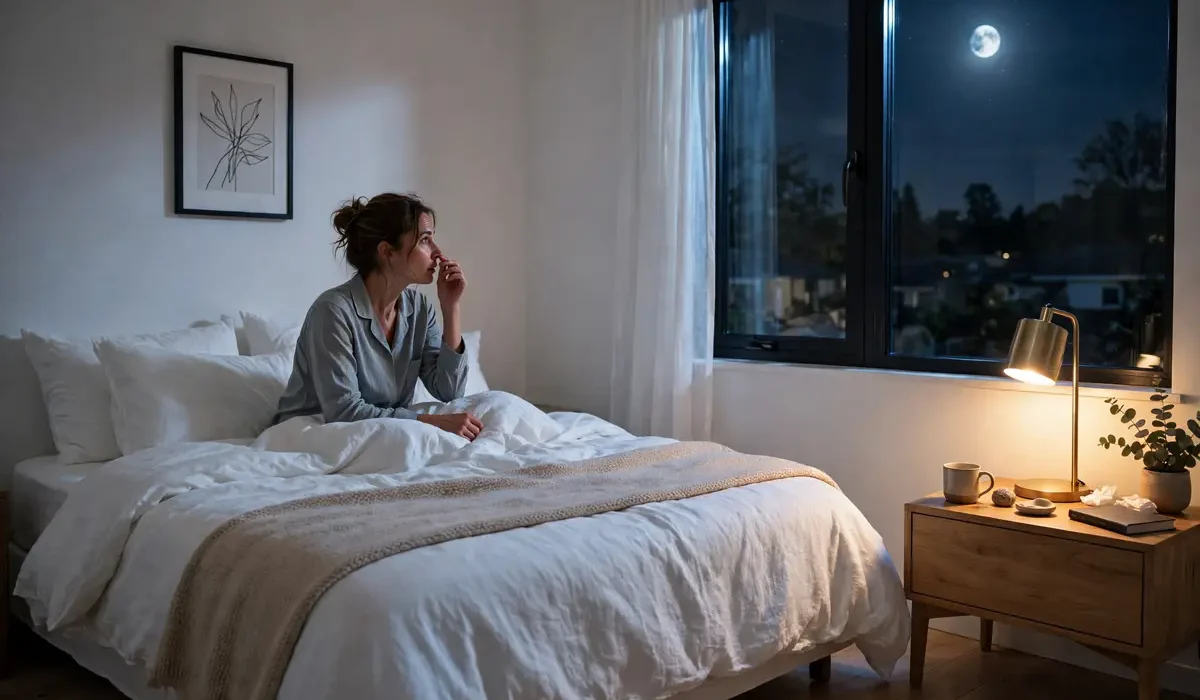
It is 11 p.m., and there it is again — that sharp, sulfurous stink, like a dozen rotten eggs left on the counter. But at breakfast, the house smelled fine. If you keep asking why does my house smell like rotten eggs only at night, you are not imagining it — the pattern has real, specific causes, and one of them is an emergency.
⚡ Quick Answer
The most common reason why does my house smell like rotten eggs only at night is a dried-out drain trap: a guest bathroom or floor drain nobody used all day lets sewer gas slip in by evening. Other causes are a blocked vent stack, sulfur bacteria in your water heater, a natural gas leak, or sulfur in your water. Rule out a gas leak first.
Why Does My House Smell Like Rotten Eggs Only at Night?
Your house changes after dark, and that explains why does my house smell like rotten eggs only at night. On a cold night, warm air rises and escapes through the attic, and replacement air gets pulled in low — through drains, gaps, and the basement. This is the stack effect, strongest when the inside-outside temperature gap is greatest, usually after midnight.
🔑 Key Takeaways
- A dried-out drain trap is the most common reason why does my house smell like rotten eggs only at night — and the easiest fix.
- Cold nights make the stack effect stronger, pulling sewer gas indoors.
- Rule out a natural gas leak first; it is the only cause that is an emergency.
Cause 1: A Dried-Out Drain Trap (Most Common)
The number-one answer to why does my house smell like rotten eggs only at night is also the simplest: a dry P-trap. Every drain has one, holding a small plug of water that seals off the sewer. When that water evaporates, hydrogen sulfide — the gas that smells exactly like rotten eggs — flows straight into the room. The usual suspects are the drains nobody uses: the guest bathroom, the basement floor drain, or a spare-bedroom shower.
The fix takes thirty seconds. Run water into every drain for a minute. Pour a cup of water into any floor drain, then add a tablespoon of cooking oil on top to slow future evaporation. If the smell disappears that night, you found it. Repeat weekly, and add it to your seasonal maintenance checklist.
Cause 2: Sewer Gas Sneaking Back Through a Blocked Vent
If the traps are full and the smell still returns at night, look up — at your roof vent. Every drain system breathes through a vent pipe through the roof. When that vent gets blocked by leaves, a nest, or ice, the system cannot equalize pressure. Flushing a toilet then siphons water out of nearby traps, or pushes sewer gas back through the lowest drain. That is another real answer to why does my house smell like rotten eggs only at night.
Evening is when the household runs the dishwasher, takes showers, and flushes the most, so the vent problem shows up exactly when the system is busiest. A gurgling toilet or a shower drain that bubbles when another fixture runs is the tell-tale sign — and a useful clue when the question is why does my house smell like rotten eggs only at night. Shine a flashlight up at the vent opening; if you can see debris, a plumber can clear it in one visit. Do not pour drain cleaner down a vent, and do not climb an icy roof in winter.
Cause 3: Your Water Heater Is Making the Gas
Here is a ten-second test: when the smell appears, run the cold tap, then the hot tap, and compare. If only the hot water smells like rotten eggs, your water heater is the source — another common reason why does my house smell like rotten eggs only at night, because evening showers stir the tank up after it has sat warm and still all day. That hot-only pattern is a classic clue to why does my house smell like rotten eggs only at night.
Inside the tank, two things create hydrogen sulfide. Sulfur-reducing bacteria thrive in the warm, oxygen-poor water at the bottom, especially if the heater sits below 140°F. And the magnesium anode rod — the rod that protects the tank from rust — can react with sulfate in the water to produce the same gas. University extension research confirms both, and notes the smell is usually a nuisance. See the Nebraska Extension explainer on smelly well water and hydrogen sulfide.
The fix starts with a flush: drain a few gallons from the tank’s drain valve (let the water cool first) to clear sediment where bacteria live. If the smell returns, a plumber can swap the anode rod for an aluminum-zinc one. See our guide on water pooling around a water heater.
Cause 4: A Natural Gas Leak — Rule This Out First
Natural gas itself has no smell. Gas companies add a chemical called mercaptan specifically so leaks smell like rotten eggs — which means the answer to why does my house smell like rotten eggs only at night could be a gas leak, not a drain problem. This is the one cause that can kill, so it comes first.
Why would a gas leak smell worse at night? Furnaces and water heaters cycle hardest on cold evenings, so a small leak releases more gas exactly when the heating system is working hardest. A leak near a bedroom is more dangerous at night because everyone is asleep.
⚠️ Safety First: If the rotten-egg smell is strong, sudden, or getting worse — or you hear hissing near a gas appliance — do not flip light switches or use your phone inside, and do not try to find the leak yourself. Leave the house immediately and call your gas company or 911 from outside. If anyone feels dizzy or nauseous, get fresh air and call 911.
If the smell is faint, sniff near the gas meter outside and near the furnace and stove. A smell concentrated around one appliance points to that appliance’s connection. But never use a match or lighter to check, and never tighten a gas fitting yourself. Once a gas leak is ruled out as the reason why does my house smell like rotten eggs only at night, work through the drain causes with a clear head.
Cause 5: Sulfur in Your Well or City Water
If the smell is in the water itself — both hot and cold, at every tap — the problem is the water supply, and that is another answer to why does my house smell like rotten eggs only at night. On a private well, sulfur-reducing bacteria in the groundwater produce hydrogen sulfide, often stronger at night because the water has sat undisturbed in the well and pipes all day. On city water, a softener with a contaminated resin bed can create the same odor.
The US Environmental Protection Agency sets a secondary standard of 250 mg/L for sulfate in drinking water, mainly for taste. Hydrogen sulfide itself is not regulated, because the smell becomes unbearable long before it reaches dangerous levels. Virginia Tech’s household water program notes most people can detect it by smell at just 0.5 to 1.0 mg/L. Their guide to sulfate and hydrogen sulfide in household water has the numbers.
Start with a water test from your local health department or a certified lab. Treatment depends on the result — chlorine injection or aeration for hydrogen sulfide, or a new resin bed for a softener. Do not just buy a filter and hope.
Cause 6: Something Dead in the Walls or Vents
The least pleasant cause is also a real one: a mouse or small animal that died inside a wall cavity, a vent, or the attic. The smell often seems to appear at night because that is when the heating system cycles and pushes air — and odor — through the ducts. If you are still wondering why does my house smell like rotten eggs only at night after checking the drains and water, look at this cause.
Unlike the other causes, this smell is usually strongest in one spot. Sniff along baseboards and near vent registers. If it is sharpest at one register, turn off the HVAC fan for an hour; if it fades, the source is in the ductwork. A pest-control pro with a borescope camera can pinpoint it — do not tear open walls on a guess.
Seal the gaps where animals enter, around pipes, vents, and the foundation, once the smell clears. For more on nighttime house sounds, see our guide on loud popping noises at night.
The 5-Minute Night-Smell Checklist
Work through this list the next evening the smell appears. Most homeowners find the answer to why does my house smell like rotten eggs only at night before step four.
- Smell the taps separately: hot only means the water heater; both hot and cold means the water supply; neither means the drains.
- Run water in every drain for one minute. If the smell is gone by bedtime, a dry trap was the cause.
- Check for gurgling. Flush the toilet and watch the nearest shower drain. Bubbling or gurgling means a blocked vent.
- Sniff around gas appliances. A strong smell at one means call the gas company now.
- Note the room: one room points to a trap or a single fixture; whole-house points to the vent or water supply.
Frequently Asked Questions
Why does my house smell like rotten eggs only at night and not during the day?
Three things combine at night: cold air strengthens the stack effect, pulling sewer gas indoors; unused drains lose their water seal by evening; and a quiet house makes faint odors easier to notice. A dried-out P-trap is the most common single cause of why does my house smell like rotten eggs only at night.
Is a rotten egg smell in my house dangerous?
It can be: sewer gas in small amounts is mostly a nuisance, but a natural gas leak smells the same way and is an emergency. If the smell is strong, sudden, or near a gas appliance, leave the house and call your gas company or 911 from outside.
Why does only my hot water smell like rotten eggs?
Hot-water-only smell almost always comes from the water heater: sulfur bacteria in the warm tank, or the magnesium anode rod reacting with sulfate in the water. Flushing the tank and fitting an aluminum-zinc anode rod usually fixes it.
Can one dry drain trap make my whole house smell?
Yes. A single dry trap can fill a room with sewer gas, and on a cold night the stack effect spreads it through the house. Run water in every drain, starting with the ones you rarely use — the guest bathroom and the basement floor drain are the usual culprits.
A house that smells like rotten eggs only at night is trying to tell you something, and the message is usually simple: a drain dried out, a vent clogged, or a water heater needs attention. Rule out a gas leak first, then run the five-minute checklist — most homeowners find the answer to why does my house smell like rotten eggs only at night the same evening. The gas leak is the one cause that cannot wait at all.
Not sure what your home needs?
Build a free, personalized maintenance plan in under 2 minutes.
Build My Home PlanRelated Articles
 Plumbing
Why Does My Faucet Whistle When I Turn It On? 6 Simple Causes (And the $10 Fix)
Your faucet whistles because water vibrates past a worn washer, loose cartridge, or clogged aerator. Do the pitch…
 Plumbing
Why Does My Shower Gurgle When I Flush the Toilet? 5 Real Causes & Fixes
Your shower gurgles when you flush? Learn the 5 real causes, from a blocked vent to a dry…
 Plumbing
Why Is My Tap Water Cloudy in Winter? The 1-Minute Glass Test
Your tap water turns cloudy in winter? Try the 1-minute glass test to tell harmless air bubbles from…