Why Is My Tap Water Cloudy in Winter? The 1-Minute Glass Test
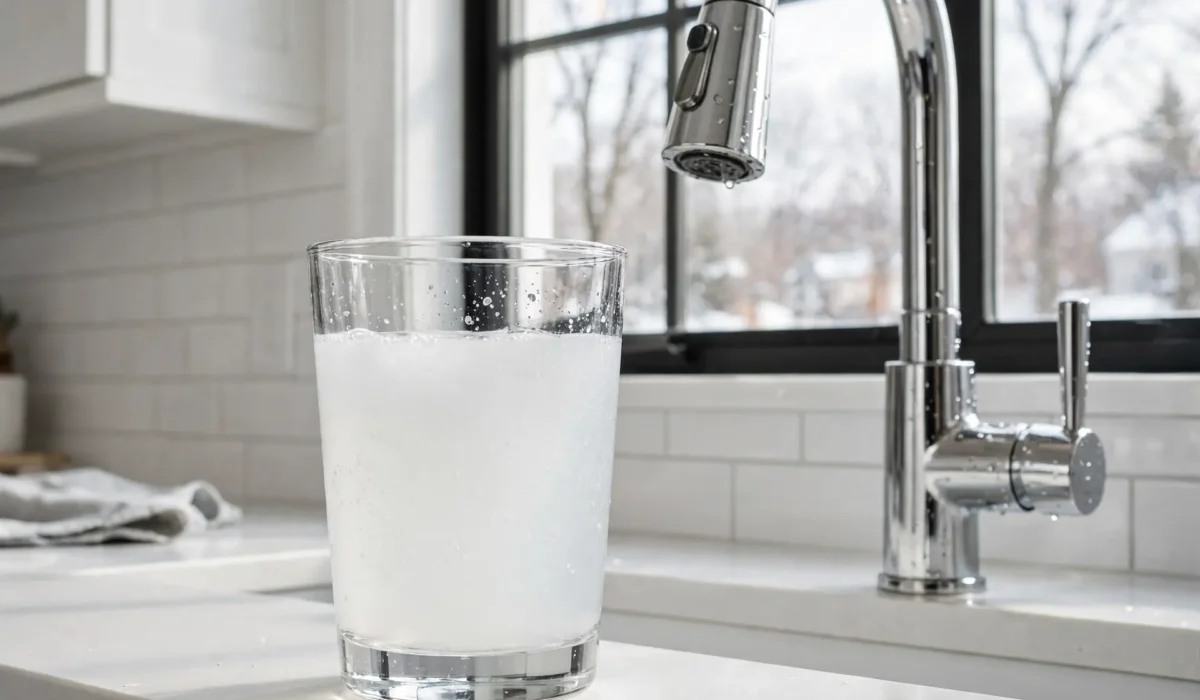
You turn on the kitchen tap on a cold morning, fill a glass, and get something milky white instead of clear water. You wonder whether it is safe to drink, whether your pipes are failing, or whether your supply has changed overnight. If you are asking why is my tap water cloudy in winter, you are not alone: it is one of the most common cold-season complaints utilities hear, and in most homes the answer is reassuringly simple.
Winter changes how water behaves. Cold water holds more dissolved air, and water that has sat in cold pipes warms up quickly once it reaches your heated kitchen. That can turn a glass cloudy for a minute or two, then clear again on its own. The trick is knowing which kind of cloudiness is harmless and which is a warning sign, because sediment, rust, and water-heater problems can look similar at first glance.
⚡ Quick Answer
In most homes, the answer to why is my tap water cloudy in winter is simply tiny air bubbles trapped in very cold water. Fill a glass and watch: if it clears from the bottom up within a minute or two, it is harmless air and safe to drink. If it stays cloudy, clears from the top down, leaves grit, or looks brown, the cause is sediment, rust, or a water-heater problem that needs a closer look.
Do the 1-Minute Glass Test First
Before you call anyone or buy a filter, run this simple test. It takes less than two minutes, costs nothing, and tells you more than guessing will. Use a clear glass, not a colored mug, so you can see what happens.
- Fill a clear glass from the cold tap and set it on the counter. Do not stir it.
- Watch the direction it clears. Air bubbles rise, so a glass full of air clears from the bottom up as the bubbles escape upward.
- Time it. Harmless air usually clears within 30 seconds to two minutes.
- Check what is left behind. Look at the bottom of the glass once it clears. Clean water leaves nothing. Grit, sand-like particles, or a brown tint point to sediment or rust.
- Repeat with the hot tap. If only the hot water is cloudy, the cause of why is my tap water cloudy in winter is almost certainly your water heater, not your water supply.
Write down what you saw: that one observation narrows the cause immediately, and a plumber or your utility will ask exactly this question first. Keep the test with your home maintenance checklist so you repeat it each winter instead of starting from scratch.
🔑 Key Takeaways
- Clears bottom-up in under two minutes: harmless air bubbles, no action needed.
- Stays cloudy or leaves grit: sediment or a filter, aerator, or water-heater issue.
- Only the hot tap is cloudy: check your water heater first.
- Brown, yellow, or rusty water: stop, do not just filter it away, and investigate the source.
- Cloudy water at every tap after nearby roadwork or a main break: call your utility.
Why Is My Tap Water Cloudy in Winter? The Main Causes
Once you have your glass-test result, match it to a cause below. Most winter cloudiness falls into five buckets, and only two usually need a repair.
1. Tiny Air Bubbles (The Most Common Cause)
Cold water holds more dissolved gas than warm water. In winter, water in the mains and your cold pipes is very cold and under pressure, so it carries extra dissolved air. The moment it leaves the tap, pressure drops, the water warms slightly, and that air escapes as thousands of microscopic bubbles. The water looks milky white, but it is just air: harmless, self-clearing, and tasteless once the bubbles escape.
2. Cold Water Warming Up Inside Your Pipes
Water sitting overnight in cold basement or exterior-wall pipes is at its coldest, then rushes into a warm kitchen and warms a few degrees in seconds, releasing dissolved air. That is a big part of why is my tap water cloudy in winter, especially first thing in the morning. Running the tap briefly before filling your glass often reduces the effect.
3. Sediment Stirred Up in the Pipes
Sediment is fine mineral matter, sand, or scale settled inside pipes and mains. In winter, pressure changes, hydrant flushing, or nearby construction can stir it loose. Unlike air, it does not float away: the glass may clear top-down as particles sink, or stay hazy and leave grit — the sediment pattern behind why is my tap water cloudy in winter. If it appears suddenly at every tap, check for utility flushing or a main break before assuming the problem is inside your home.
4. Water-Heater Sediment (Hot Water Only)
If cold water is clear but hot water is cloudy, why is my tap water cloudy in winter is a water-heater question. Here, why is my tap water cloudy in winter comes from minerals in hard water settling in the tank as sediment: heating stirs it up to your taps, making hot water milky or gray. You may also hear popping or rumbling from the tank. This is maintenance, not an emergency, but ignoring it shortens the tank’s life. See also our guide to water pooling around a water heater.
5. Rust and Corrosion in Old Pipes
Rust gives cloudiness a color. If water looks yellow, brown, or orange, aging galvanized pipes or a corroding heater may be shedding rust into it, more often in older homes and where water sits unused. One rusty glass after a vacation is often just stagnant water clearing out, but persistent brown water at multiple taps stains laundry and fixtures and may signal pipes near the end of their life. Do not mask it with a pitcher filter.
What Your Glass Test Result Means
Use this table to turn your observation into a next step, rather than replacing parts at random.
Why Winter Makes Cloudy Water More Likely
Winter stacks several small effects together, which is why so many homeowners ask why is my tap water cloudy in winter. The water entering your home is colder than in any other season, so it holds the most dissolved air, and the temperature jump from a cold pipe to a warm tap is at its largest. Winter is also when utilities flush hydrants and repair mains damaged by freezing ground, stirring sediment into the supply for a day or two. Finally, water sits longer in rarely used guest-bathroom lines, picking up more air and sediment. None of this means your plumbing is failing; winter is simply the season when normal water behavior becomes visible.
When Cloudy Water Is Not Safe to Ignore
Most cases of why is my tap water cloudy in winter are harmless, but not every glass deserves that reassurance. Investigate if water is brown, yellow, or black, smells of chemicals, fuel, or sewage, leaves an oily film or black particles, or coincides with stomach symptoms. The same caution applies with a sudden pressure drop, which can mean a break or leak, or if only one faucet is affected. Then switch to bottled water until you know the cause, and call your utility first if neighbors report the same problem.
⚠️ Safety First: If water is brown and smells strange, or you suspect gas, sewage, or chemical contamination, do not try to fix it with a filter. Use bottled water for drinking and cooking, and call your utility or a licensed plumber right away. Filters remove particles; they do not make contaminated water safe.
How to Fix Cloudy Tap Water in Winter
Work through these fixes in order, starting with the free ones. Most homeowners stop at step two, and that is fine: the answer to why is my tap water cloudy in winter is usually air, not a repair.
- Let the glass settle. If the test shows air bubbles, there is nothing to fix; just let the water sit a minute before drinking.
- Run the tap briefly. Open the cold tap for 30 seconds before filling a drinking glass, especially first thing in the morning. This clears stagnant, air-rich water from the branch line.
- Clean the aerator. Unscrew the small screen at the faucet tip, rinse out trapped sediment, and soak it in vinegar if crusted with scale. A clogged aerator can also reduce flow, so check it whenever water pressure is low in only one faucet.
- Check and replace filters. If you use a whole-house or under-sink filter, a filter past its service life can release fine particles and make water hazy. Replace it on schedule and flush the line after fitting a new cartridge.
- Flush the water heater. If why is my tap water cloudy in winter involves only the hot water, flushing tank sediment often clears it. Follow the manufacturer’s instructions exactly, or hire a plumber if you are unsure around a hot tank. See Family Handyman’s water-heater flushing guide.
- Call the right professional. Call your utility if every tap is cloudy, neighbors have the same problem, or it started after utility work. Call a licensed plumber if it is limited to your home, persists after flushing and cleaning aerators, or you suspect rusted pipes.
💡 Pro Tip: Test both a kitchen tap and a bathroom tap. If only one tap is cloudy, the cause is almost always that faucet’s aerator or its branch line, not your whole water supply, and you can fix it in ten minutes without a service call.
How to Prevent Cloudy Water Next Winter
You cannot stop cold water from holding air, but you can reduce the other causes of why is my tap water cloudy in winter: replace filters on schedule, clean aerators twice a year, and have your water heater flushed regularly, especially with hard water. Insulate exposed pipes, which also helps against pipes freezing when it was not that cold outside, and run rarely used taps briefly each week. Cold weather plays similar tricks on other fixtures, including a toilet whose water level drops in cold weather. For drinking-water regulation background, see the EPA’s drinking-water standards and its ground-water and drinking-water pages. Add this check to the same fall routine as winterizing your outdoor faucets.
Frequently Asked Questions
Is cloudy tap water in winter safe to drink?
Yes, if it clears from the bottom up within two minutes and leaves nothing behind — that is the harmless-air answer to why is my tap water cloudy in winter. If it stays cloudy, looks brown, or smells unusual, investigate first.
Why is my tap water cloudy in winter but clear in summer?
That is the same effect behind why is my tap water cloudy in winter: cold water holds more dissolved air, and warming up in a heated kitchen releases it as bubbles. In summer the water is warmer, holds less air, and the effect is far less noticeable.
Does cloudy water mean my water heater is failing?
Not necessarily. Cloudy hot water usually means sediment buildup, which flushing often fixes. Rumbling noises, rust-colored hot water, or leaks are stronger signs the heater needs professional attention.
Should I buy a filter for cloudy winter water?
Only if the cause is sediment or particles. A filter will not remove dissolved air or fix rusted pipes. Run the glass test first, so you buy a solution for the actual cause instead of guessing.
Conclusion
Why is my tap water cloudy in winter looks worrying, but it usually has a simple explanation. Start with the 1-minute glass test, trust what it tells you, and work through the fixes in order: settle, flush, clean the aerator, check the filter, and only then call for help. That sequence saves most homeowners an unnecessary service call, and helps you recognize the rare cases that genuinely need attention, like persistent brown water. So the next time you wonder why is my tap water cloudy in winter, you will have the answer in a minute.
Not sure what your home needs?
Build a free, personalized maintenance plan in under 2 minutes.
Build My Home PlanRelated Articles
 Plumbing
Why Does My Faucet Whistle When I Turn It On? 6 Simple Causes (And the $10 Fix)
Your faucet whistles because water vibrates past a worn washer, loose cartridge, or clogged aerator. Do the pitch…
 Plumbing
Why Does My Shower Gurgle When I Flush the Toilet? 5 Real Causes & Fixes
Your shower gurgles when you flush? Learn the 5 real causes, from a blocked vent to a dry…
 Plumbing
Why Does My House Smell Like Rotten Eggs Only at Night? 6 Proven Causes
Your house smells like rotten eggs only at night? Here are the 6 real causes — from a…