Why Is There Water Pooling Around My Water Heater? (7 Real Causes & Fixes)
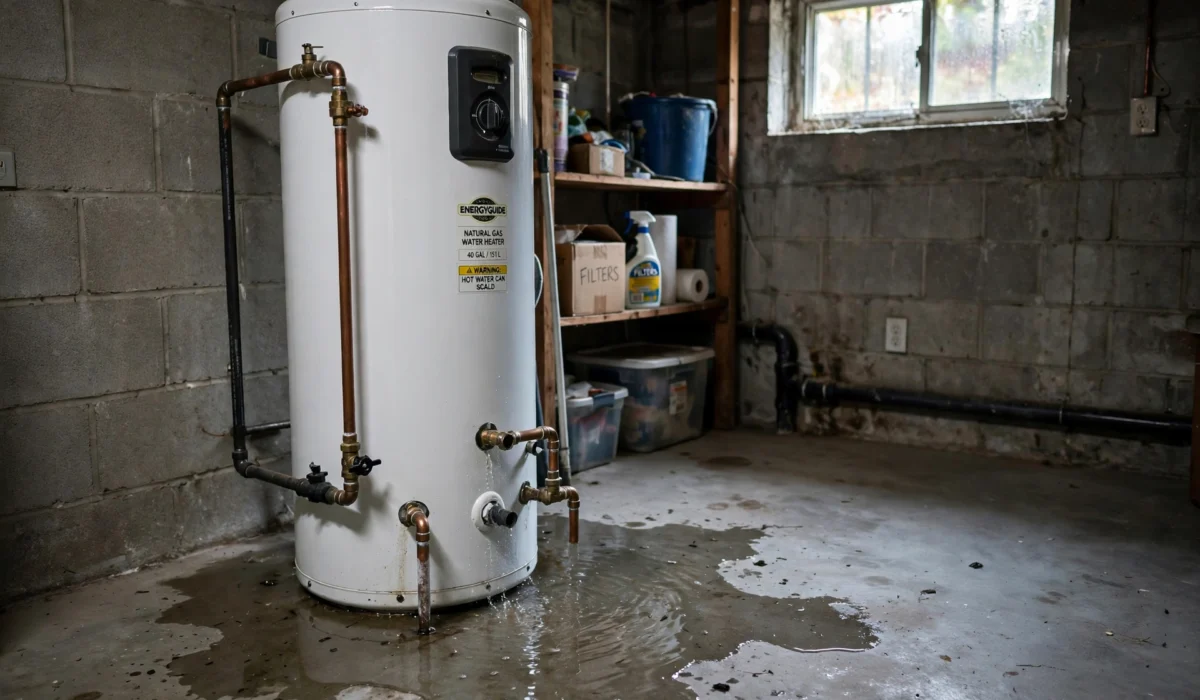
You walk into the basement or utility closet and spot it: a puddle of water spreading across the floor around the base of your water heater. Your stomach drops. water pooling around water heater is one of those problems that can mean almost nothing — or a lot. Sometimes it’s just condensation; sometimes the tank itself is failing and a flood is only a matter of time.
The good news: you can usually figure out which one it is in about ten minutes with nothing more than a flashlight, some paper towels, and a dry floor. This guide walks you through the real causes, in order from most harmless to most serious, plus exactly what to do about each one.
First, Dry the Floor and Find Where the Water Comes From
Before you fix anything, you need to know where the water is actually coming from. Wipe the floor completely dry with old towels, then place dry paper towels or a light-colored cloth in a ring around the heater’s base. Wait 30–60 minutes and check where the towel gets wet first. Water pooling around your water heater often looks like it’s coming from the tank, but it’s really running down from a fitting or valve above.
While you wait, do a quick visual inspection. Tracking water pooling around water heater units to its source is half the battle — most drips leave a visible trail:
- Look at the top of the tank where the hot and cold water pipes connect.
- Check the temperature and pressure (T&P) relief valve on the side of the tank — it has a small discharge pipe pointing down.
- Look under the tank for the drain valve near the bottom.
- Feel the pipes and fittings with your hand for dampness.
7 Real Causes of Water Pooling Around a Water Heater
1. Normal Condensation (The Harmless One)
A brand-new or very efficient gas water heater can “sweat” during its first few hours of operation. When the cold water entering the tank meets the hot flue gases, moisture condenses on the tank’s outer surface and drips down. This usually stops once the water in the tank is fully heated. If the puddle is small, appears only after the heater runs, and goes away on its own, condensation is likely all it is. You can confirm it by drying everything and checking again after the tank finishes a heating cycle.
2. Leaking Pipe Fittings or Connections
The most common source of water pooling around water heater installations is not the tank at all — it’s a loose or corroded fitting where the hot and cold water lines connect at the top. Water runs down the side of the tank and collects at the base, making it look like the tank is leaking. Tighten any visibly loose fittings, and check the dielectric unions or flex connectors for corrosion. If tightening doesn’t stop the drip, replace the connector — it’s an inexpensive part. If your household has dealt with a low water pressure in one faucet, a failing shutoff valve or supply line in the same system may be at play here too.
3. A Leaking Temperature and Pressure (T&P) Relief Valve
The T&P valve is a safety device that releases water if the temperature or pressure inside the tank gets dangerously high. A small amount of discharge can be normal after a heating cycle, but if the discharge pipe is constantly dripping or the valve is stuck open, the valve is likely faulty or the tank’s pressure is too high. Check the water pressure in your home with a gauge on an outdoor spigot — it should read between 40 and 80 psi. Consistently high pressure means you need a pressure-reducing valve or an expansion tank. A leaking T&P valve is easy to replace, but if the new one leaks too, the underlying pressure problem is the real issue. For a broader look at how pressure problems show up around the house, see our guide on why pipes freeze in mild weather — pressure and plumbing stress often go together.
4. A Dripping Drain Valve
The drain valve sits near the bottom of the tank and is used when flushing sediment. These valves — especially plastic ones — often develop a slow drip after they’ve been used, or simply with age. A slow drip here is an easy fix: make sure the valve is fully closed, or replace it with a brass ball valve, which seals far more reliably. When you do, it’s a good time to flush the tank, since sediment buildup accelerates corrosion and shortens the tank’s life.
5. Condensate From a High-Efficiency (Condensing) Unit
If you have a high-efficiency or tankless water heater, it produces acidic condensate as a normal byproduct of combustion. That condensate drains through a small tube to a pump or floor drain. If the condensate line is clogged, disconnected, or the pump has failed, water backs up and pools around the unit. Check that the condensate line is clear and flowing, and that the condensate pump (if present) is running. This is easy to overlook because the water may not appear near any “hot” part of the heater.
6. A Leaking Tank — Corrosion From the Inside Out
This is the serious one. Water heaters typically last 8–12 years. As the anode rod (the sacrificial metal rod inside the tank that prevents rust) wears out, the steel tank begins to corrode from the inside. Once the tank itself is leaking, there is no repair — the water heater must be replaced. Signs that point to a dying tank:
- The tank is 8+ years old (check the serial number — the first four digits on most brands encode the manufacturing date).
- Rusty or discolored water coming from hot-water taps.
- Rumbling or popping noises from sediment baked onto the bottom of the tank.
- The wet spot is directly under the tank’s center, not traceable to any fitting or valve.
If you suspect a tank leak, put a drip pan under the heater immediately, know where your water shutoff valve is, and start planning a replacement. A tank can go from a slow seep to a burst surprisingly fast. The U.S. Department of Energy’s water heating guide notes that a typical tank water heater lasts 8–12 years, and regular maintenance — like checking the anode rod and flushing sediment — can stretch that lifespan.
7. An Overflowing Drain Pan or Failed Water Line Nearby
Sometimes the water isn’t from the heater at all. A leaking supply line, a sweating cold-water pipe in a humid basement, or a nearby washing machine hose can send water across the floor until it pools at the heater’s base — the lowest point. If your paper-towel test shows the towel staying dry right at the tank while water appears a few feet away, look at the surrounding plumbing and appliances instead. And if your basement is damp in general, our guide on seasonal home maintenance includes basement moisture checks worth running twice a year.
Water Pooling Around Water Heater: Condensation vs. Real Leak
| Sign | Likely Condensation | Likely a Real Leak |
|---|---|---|
| When it appears | Only after the heater runs; goes away on its own | Persistent or growing; returns after drying |
| Water amount | Small damp patch, under an inch wide | Standing puddle that spreads |
| Water color | Clear | May be rusty or discolored |
| Source you can find | No drip point; just general dampness | Traceable to a valve, fitting, or the tank itself |
| Tank age | Any age, often a new unit | Usually 8+ years old |
What to Do Right Now — Step by Step
- Dry the floor and run the paper-towel test to locate the source.
- Check the easy suspects first: T&P valve, drain valve, top fittings, condensate line.
- Check the tank’s age from the serial number. Over 10 years old with a tank leak means replacement, not repair.
- Shut off the water and power (electric) or set the gas valve to pilot if the leak is worsening or you can’t find the source.
- Call a licensed plumber if the tank itself is leaking, the T&P valve discharges heavily, or you smell gas.
For electric water heaters, never let water reach the wiring compartment — if the bottom access panel is wet, cut the power at the breaker before touching anything. For a refresher on electrical safety basics, see why lights dim when the furnace starts, which covers how heavy appliance loads behave on your home’s circuits. If you want a deeper dive on the T&P valve itself, Family Handyman’s T&P valve replacement guide walks through testing and swapping one safely.
FAQ
Q: Can a water heater leak without the tank being bad?
A: Yes — most of the time. Fittings, the T&P relief valve, and the drain valve leak far more often than the tank itself. Rule those out first before assuming the heater needs replacing.
Q: Is a little water under my water heater normal?
A: A small amount can be normal condensation, especially on a new or high-efficiency unit. But it should be a damp spot, not a puddle, and it should disappear on its own. When you see genuine water pooling around water heater bases that persists or grows, it is not normal and should be investigated promptly.
Q: How much does it cost to replace a leaking water heater?
A: In the US, a standard 40–50 gallon tank replacement typically runs $1,200–$2,500 installed, depending on your area, the fuel type, and permit costs. A T&P valve or drain valve replacement, by contrast, costs under $50 in parts.
Q: Should I turn off my water heater if it’s leaking?
A: If the leak is more than a slow drip, if water is spreading, or if you can’t find the source — yes. For electric heaters, switch off the breaker. For gas, turn the gas valve to pilot or off, then close the cold-water supply valve on top of the tank.
Conclusion
Water pooling around a water heater is scary, but it’s rarely a mystery once you know where to look. Start with the simple paper-towel test, check the fittings and valves first, and remember that a leaking tank — while serious — is only one of several possibilities. Catch it early, act quickly, and you’ll either save yourself a plumber visit or catch a failing tank before it floods your basement. Either way, you’ve done your house a favor.
Not sure what your home needs?
Build a free, personalized maintenance plan in under 2 minutes.
Build My Home PlanRelated Articles
 Water Heater & Appliances
Why Is My Garbage Disposal Humming But Not Spinning? (Real Fix)
Your disposal isn’t dead. That’s the first thing to get straight if you’re standing over the sink wondering…
 Water Heater & Appliances
Why Is My Dryer Taking So Long to Dry Clothes? (7 Real Causes)
You start a load before dinner, figure it’ll be done in an hour, and come back to clothes…