Why Is My Dryer Taking So Long to Dry Clothes? (7 Real Causes)
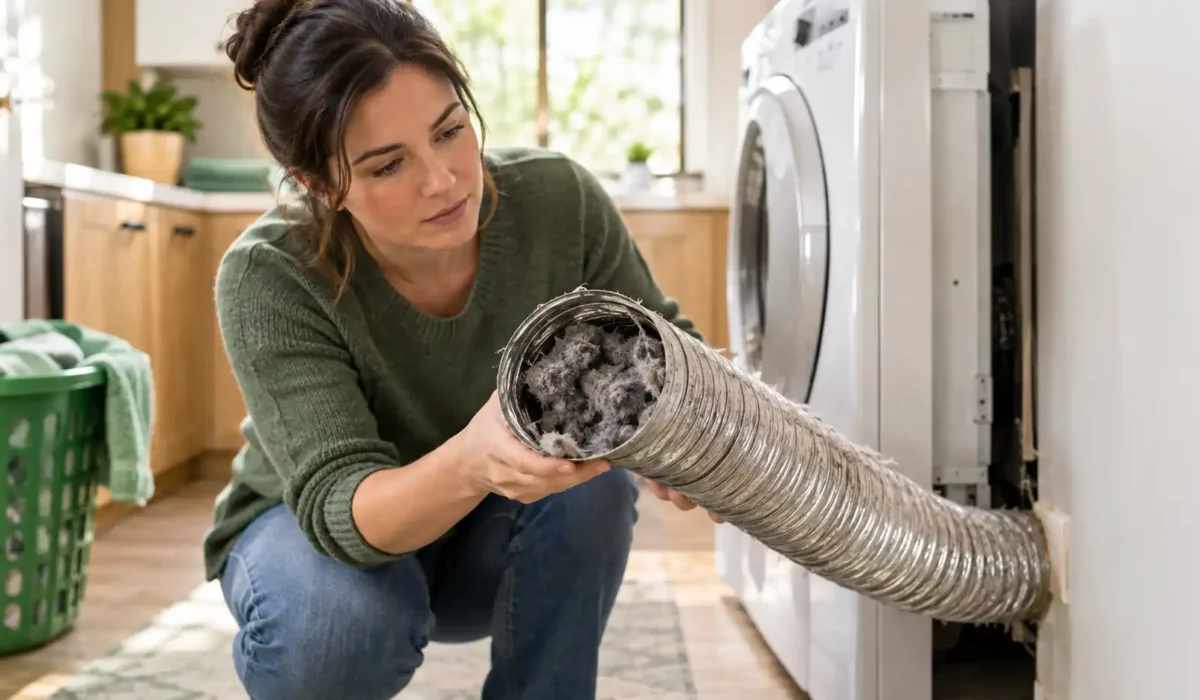
You start a load before dinner, figure it’ll be done in an hour, and come back to clothes that are warm, tumbled, and still damp. You run it again. Still damp. If you’ve stood in front of your dryer wondering why is my dryer taking so long to dry clothes, you’re dealing with one of the most common — and most fixable — appliance complaints in any home. In most cases, the cause is something you can identify yourself in about ten minutes, before you ever think about calling for repair.
This guide walks through the real, most likely reasons a dryer takes too long to dry clothes, in the order you should actually check them — starting with the cheapest, easiest fix and working toward the ones that call for a professional. Whether your dryer runs but clothes still come out damp, or the machine just seems to be dragging on forever, the troubleshooting order below stays the same.
Your Lint Filter and Vent Are Clogged
This is the cause behind the vast majority of slow-drying complaints. Every load leaves behind lint that your filter doesn’t fully catch, and over time that lint works its way into the exhaust duct. A partially blocked vent traps the hot, moist air that’s supposed to carry moisture out of the machine, so instead of drying, your clothes just keep tumbling in humid air. Clogged dryer vent symptoms are usually easy to spot once you know what to look for: the outside of the dryer feels hotter than usual, the laundry room warms up noticeably during a cycle, or you notice a faint burning-dust smell.
A blocked dryer vent isn’t just an inconvenience — trapped lint is flammable, and it’s one of the more common causes of house fires linked to home appliances. If your dryer has been running unusually long for more than a cycle or two, treat the vent as the first thing to check, not the last.
Airflow Problems Beyond the Lint Trap
Cleaning the lint screen helps, but it’s only the first few inches of the system. A dryer vent airflow problem can also come from the rigid or flexible ducting behind the machine — a kinked, crushed, or overly long run of ducting restricts airflow just as effectively as lint does. It’s worth pulling the dryer away from the wall to check that the hose isn’t pinched, and stepping outside to confirm the exterior vent flap opens freely and swings shut when the dryer isn’t running. A flap that’s stuck closed, blocked by debris, or nested in by insects will choke off airflow completely, even with a spotless lint trap.
The Load Is Too Big, Too Dense, or Mixed Wrong
Sometimes the dryer isn’t broken at all — it’s just being asked to do more than it reasonably can in one cycle. A stuffed drum doesn’t tumble properly, so hot air can’t reach every item evenly. Mixing heavy items like towels or jeans with lightweight items such as t-shirts is another common pattern: the lighter fabrics finish drying long before the denser ones, but the cycle keeps running to catch up, which is exactly why a dryer takes forever to dry towels but not shirts in the same load. Bulky single items — a comforter, a winter coat — often do better dried alone, with a pause partway through to reposition them so damp sections get direct airflow.
Your Washer Might Be Sending Over Clothes That Are Too Wet
If a load goes into the dryer heavier and wetter than usual, no dryer setting will fully compensate. This is worth ruling out before you assume the dryer itself is at fault. Check that your washer’s spin cycle is set appropriately for the fabric — a lower spin speed leaves noticeably more water in the clothes, which can turn a normal 45-minute dry cycle into something that drags on far longer. If you can wring visible water out of clothing straight from the washer, the washer’s spin performance, not the dryer, is the first thing to look at.
The Moisture Sensor May Be Coated or Misreading
Most modern dryers use a small moisture sensor — usually two metal strips near the lint trap opening — to decide when a load is actually dry. Dryer moisture sensor not working correctly is a surprisingly common, and surprisingly overlooked, cause of long cycles. Residue from dryer sheets or liquid fabric softener can coat these strips over time, so the sensor keeps “reading” the load as damp even after it’s finished drying, and the cycle just keeps extending. Wiping the sensor bars gently with a cloth dampened in rubbing alcohol every few months is a simple bit of maintenance that a lot of people never think to do.
The Heating Element Could Be Failing — Not Failed, Just Failing
There’s a meaningful difference between a dryer that produces no heat at all and one that’s only partially heating. A fully failed heating element is obvious — the drum tumbles, but everything stays cold and wet no matter how long you run it. A partially failed element is sneakier: the dryer runs warm, maybe even hot to the touch, but it takes two or three cycles to finish a normal load. If you’ve asked yourself why does my dryer take 2 hours to dry one load, and you’ve already ruled out the vent, the load size, and the sensor, a weakening heating element — or a related thermostat or thermal fuse issue — is a strong next suspect. This is also where dryer gets hot but clothes stay wet after full cycle complaints usually trace back to.
Ask Yourself: Did This Happen Gradually, or All at Once?
The timeline of the problem is one of the most useful diagnostic clues you have, and it’s free. If your dryer has been slowly getting worse over months, lint buildup in the vent is the most likely story — it accumulates gradually, and drying times creep up right along with it. But if you’re wondering why is my dryer suddenly taking longer to dry after it was working fine last week, that points more toward a specific component failure: a sensor, a heating element, a thermal fuse, or a blower wheel issue. A dryer that now consistently needs multiple cycles to finish a load it used to handle in one is telling you something changed, not just built up.
| Do | Don’t |
|---|---|
| Clean the lint filter before every single load, without exception | Assume a “quick wipe” once a week is enough — lint builds up fast |
| Check the exterior vent flap opens freely at least twice a year | Ignore a hot laundry room or hot dryer exterior during a cycle |
| Dry heavy and lightweight fabrics in separate loads when possible | Cram a full week’s laundry into one oversized load to save time |
| Wipe the moisture sensor bars every few months | Keep re-running the same load hoping the next cycle will finish it |
| Call a licensed technician for heating element or thermal fuse repairs | Open up the dryer’s internal wiring or gas components yourself |
I didn’t take this seriously myself until I actually timed it. A load that used to finish in about 40 minutes had crept up to well over an hour, and I’d just been quietly living with it — running an extra cycle, figuring the dryer was “just getting old.” It wasn’t until I pulled the machine away from the wall and found a flattened, lint-packed section of vent hose behind it that the drying time went right back to normal. Nothing else about the dryer had changed. The lesson that stuck with me: a slow dryer rarely announces itself loudly. It just gets a little worse, load by load, until one day two hours feels normal.
When It’s Time to Call a Professional
Cleaning a lint trap, checking a vent hose, and wiping a sensor are all reasonable homeowner tasks. Diagnosing a heating element, thermal fuse, thermostat, or blower wheel — or anything involving a gas dryer’s gas line or venting — is not, and shouldn’t be treated as a weekend project. If you’ve worked through airflow, load size, and the sensor and the dryer is not drying properly, still taking multiple cycles to finish a load, that’s a reasonable point to bring in a licensed appliance technician rather than continuing to guess.
Frequently Asked Questions
Can a clogged dryer vent really cause long drying time?
Yes — it’s the single most common cause. Lint builds up inside the duct and traps the hot, moist air that’s supposed to carry moisture outside, so clothes stay damp and cycles run far longer than they should. It’s also a genuine fire risk, which is exactly why it’s worth checking first rather than last.
Why is my dryer hot but clothes are still wet?
This points to an airflow problem rather than a heating problem — the dryer is generating heat, but it isn’t moving through the drum and out through the vent efficiently enough to actually carry moisture away. A clogged vent or a badly restricted lint screen is the most likely cause, though a coated moisture sensor can occasionally produce a similar-feeling result.
Is a dryer that takes too long to dry a fire hazard?
It can be, and it’s worth taking seriously rather than dismissing as a minor annoyance. Long drying times are frequently a sign of lint accumulation somewhere in the vent path, and accumulated lint is flammable. If your dryer is consistently running long, cleaning and inspecting the full vent run isn’t just about speed — it’s a legitimate safety task.
Can overloading a dryer cause it to take longer?
Yes. An overstuffed drum can’t tumble clothes properly, which means hot air doesn’t reach every item evenly, and the load ends up drying unevenly and slowly. Mixing very different fabric weights in the same load causes a similar effect, since lighter items finish long before heavier ones and the cycle keeps running to compensate.
How do I clean my dryer vent myself?
You can safely clean the first few feet of ducting directly behind the dryer using a basic dryer vent brush kit, after unplugging the machine and pulling it away from the wall. However, most vent runs continue through a wall or ceiling to the exterior, and that full length is usually too long and awkward to clean thoroughly yourself — a partial cleaning that leaves lint deeper in the duct can occasionally make airflow worse rather than better, so a full professional cleaning is worth considering if it’s been more than a year or two.
Most of the time, the answer to why is my dryer taking so long to dry clothes comes down to something simple: a dirty vent, an oversized load, or a sensor that needs a wipe-down. Work through the list in order, starting with the lint trap and vent, and you’ll usually find the cause before you ever need to pick up the phone.
Get a personalized checklist for your appliances, HVAC, and more — generated in under two minutes.
See recurring appliance and seasonal tasks organized by month, so nothing gets forgotten.
Think back to your last few loads — has your dryer actually been finishing faster than you remember, or have you quietly been running everything twice without really questioning it?
Not sure what your home needs?
Build a free, personalized maintenance plan in under 2 minutes.
Build My Home PlanRelated Articles
 Plumbing
Why Is My Water Pressure Low in Only One Faucet? (Real Causes)
Is it just the kitchen sink, or has the whole house gone weak? That one question is usually…