Why Does My House Make Loud Popping Noises at Night When It’s Cold? (Normal vs. Warning Signs)
Winter night noises
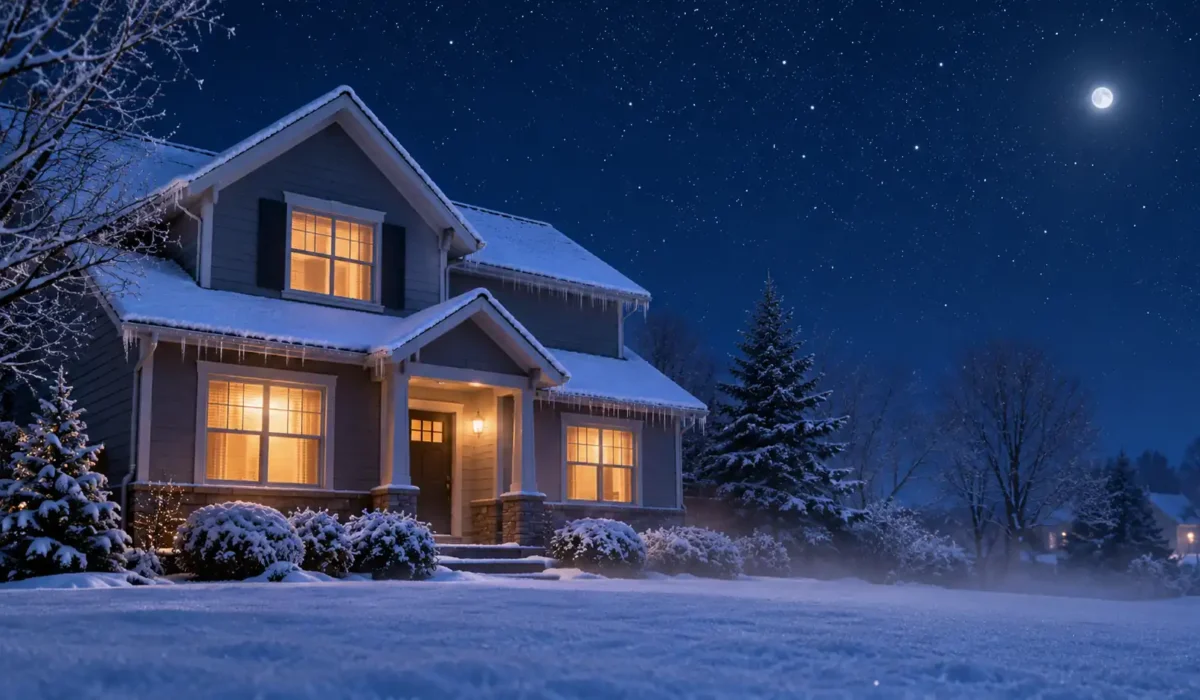
Some of the loudest bangs you hear on a freezing night do not come from your house at all. They can come from the ground beneath it, where frozen water cracks the soil. If you have been lying awake wondering why does my house make loud popping noises at night when it’s cold, there are several possible sources, and most of them are harmless.
This guide explains the usual causes, from wood and siding to ductwork, pipes, roofs and the ground itself. It shows how to tell a normal winter pop from a warning sign, what you can safely do about the noise, and when to call a professional.
Why does my house make loud popping noises at night when it’s cold? Start with thermal movement
Almost every building material expands when it warms and contracts when it cools. Wood, concrete, steel, vinyl and siding all do it, and they do it at different rates. When they shrink against each other, they can stick, then slip, and the release makes a pop or a bang. This shrinking is thermal contraction, and it is behind many house noises in winter.
A carpenter answering a homeowner’s question in the Boston.com home improvement column called it thermal expansion and contraction, and described it as harmless. He added that wood contracts more in winter because the dry air pulls moisture out of it.
A civil engineering professor quoted by KROC News added that the foundation stays at a steadier temperature while the outside of the house shrinks against it, so the joints between them can make noise.
House popping noises in cold weather: ductwork and oil canning
If you are asking why does my house make loud popping noises at night when it’s cold and the pops come in a rhythm, right after the heat starts and again about ten minutes after it stops, look at the ductwork first. Hot air rushing into cold metal ducts makes them expand, and the walls of the duct can flex in and out like the side of an old oil can. That flexing is called oil canning.
A This Old House heating expert explained in a guide to quieting noisy ducts that a duct rubbing against wood can pop suddenly and then pop again as it cools. His suggestions included rubber pads between the duct and the wood, checking that the return register is not blocked, and asking an HVAC technician to confirm the system is not pushing more air than it was designed for.
The Money Pit radio show adds that ducts normally have diamond-shaped creases for rigidity, so a flat section can be the one that bangs.
Loud bang in house at night when cold: ice quakes and the foundation
Some bangs really do come from outside. A National Weather Service meteorologist told WCCO that when water seeps into the ground and temperatures then drop quickly, the water freezes and expands, and it has nowhere to go, so it can crack the ground. The scientific name is cryoseism, and it is often called an ice quake. The WCCO report on ice quakes says these events tend to happen at night and are relatively harmless to a home’s structure.
If you hear a single large boom on a very cold night, with nothing visibly damaged by morning, that is one of the less worrying answers to why does my house make loud popping noises at night when it’s cold. A boom that repeats in the same spot, or comes with new cracks, is a different matter, which the warning-signs section below covers.
A cold night, stage by stage: when the popping usually happens
| Stage | What is happening | What you may hear | What it usually means |
|---|---|---|---|
| Early evening | Temperature falls quickly after sunset, so siding and framing contract at different rates | Ticks and pops in walls or the attic | Normal thermal movement |
| Furnace starts | Hot air enters cold ducts and the metal expands | A bang or pop near vents and ceilings | Oil canning |
| Furnace stops | The ducts cool and shrink back | A second pop several minutes later | Oil canning again |
| Deepest cold | Ground water or roof framing reacts to the lowest temperatures | A single loud boom or crack, often from outside | Possible ice quake or roof contraction |
Pipes and roofs: two other sources worth knowing about
These are two more answers to why does my house make loud popping noises at night when it’s cold that people often overlook.
Pipes
The Boston.com carpenter noted that cold pipes can pop when hot water runs through them.
Roof
Roof framing and metal roofing can contract at night, so a roof popping noise in cold weather is often normal. Pops from a roof carrying heavy snow are the exception, as they deserve a closer look.
Furnace ignition
A delayed bang just as a gas furnace lights is a furnace issue, not a thermal pop, and a technician should check it.
A pattern from my research
Reading local news explainers and expert Q&As on this topic, I noticed that nearly every one starts by calling the noise harmless, then adds a small exception almost as an afterthought: a snow-loaded roof, repeating pops in one spot, or visible cracks.
So the exceptions are the real point here: the noise is usually normal, but you need to recognize them.
Why does my house make loud popping noises at night when it’s cold, and when should you worry?
Most winter pops are harmless, but a few signs call for a professional. A contractor interviewed by WCCO said that creaking or popping from a roof carrying heavy snow is something to take care of, and the WCCO report says the same about sudden roof movement.
Treat these as reasons to call someone:
- Loud pops that repeat in one spot, especially with new cracks in drywall, plaster or the foundation.
- Doors or windows that begin to stick or swing on their own. One local radio home show notes that several doors starting to swing or hit the jamb can be a sign of settling, as described on Rosie on the House.
- Creaking or popping from a snow-covered roof, or a ceiling that looks like it is sagging.
- A bang when the gas furnace lights, rather than a pop from the ducts.
Do not climb onto a snowy or icy roof to investigate a noise. If you smell gas, leave the house and call your gas utility from outside. For a roof or foundation concern, call a qualified professional rather than trying to inspect it yourself.
What you can safely do about house popping noises
For a noise you can live with, the aim is to identify it, not necessarily to stop it. When you ask why does my house make loud popping noises at night when it’s cold, a short log usually gives the answer.
- Note the time, the location and whether the furnace had just started or stopped. A pattern tied to the heating cycle points to ductwork.
- Check that return registers are unblocked, and that no vents are closed more than your system was designed for.
- Look at ducts you can reach. Where a metal duct touches wood, rubber pads or a gap can reduce the noise.
- Ask a heating technician to check airflow if the ducts pop loudly, and have the furnace serviced before the heating season.
- Walk the outside of the house in daylight for new cracks, gaps or damage, and photograph anything that looks new.
Adding a yearly check to your routine helps. The Seasonal Maintenance calendar and the Maintenance Checklist list the cold-weather jobs that fit together, and the Maintenance Planner can build a reminder schedule for your own home. If a noise is new and you are unsure what it is, the Home Problem Finder can help you sort the symptoms step by step.
Frequently asked questions
Why does my house make loud popping noises at night when it’s cold?
Most of the time it is thermal movement. Building materials, ducts and sometimes the ground contract or shift as temperatures fall, and a pop is the sound of one surface slipping against another. Repeating pops in one spot, new cracks or a snow-loaded roof deserve a professional look. Is it normal for a house to pop and crack in cold weather?
Yes, it is common. Experts quoted in local news describe it as expansion and contraction of materials. What matters is whether the noise is occasional and harmless, or repeated in one place with visible damage. What is oil canning in ductwork?
It is the flexing of a flat section of metal duct as it heats and cools, which makes a popping or banging sound, like the side of an old oil can. It often follows the heating cycle and can sometimes be reduced by a technician. What is an ice quake?
An ice quake, or cryoseism, happens when water in the ground freezes quickly and expands, cracking the soil with a loud boom. It tends to happen at night after a sharp drop in temperature and is considered relatively harmless to a home’s structure. When should I call a professional about house noises?
Call one if pops repeat in the same spot, new cracks appear, doors or windows start to stick, a snow-covered roof creaks, or a gas furnace bangs when it lights. If you smell gas, leave the house and call your gas utility.
The next time you wonder why does my house make loud popping noises at night when it’s cold, think about the last loud noise that startled you. Did you listen for where it came from and whether the furnace had just switched on, or did you only lie there and wonder what had broken?
A single note in your phone is enough to turn a frightening sound into a useful clue.
Not sure what your home needs?
Build a free, personalized maintenance plan in under 2 minutes.
Build My Home PlanRelated Articles
 Electrical & Safety
Why Does My House Smell Like Fish When There’s No Fish? 7 Causes (One Is a Fire Warning)
A fishy smell with no fish in sight? Here are the 7 real causes — including one fire…
 Electrical & Safety
Why Does My Smoke Detector Beep Randomly? 7 Real Causes & Fixes
A random beep is rarely random. Here are the 7 most common causes of a chirping smoke detector…
 Seasonal Maintenance
How to Winterize Outdoor Faucets: 7 Steps Before the First Freeze
Winterize outdoor faucets before the first freeze with this simple 7-step checklist — protect pipes, prevent bursts, and…