Why Is There Frost on the Inside of My Front Door? (Causes and Fixes)
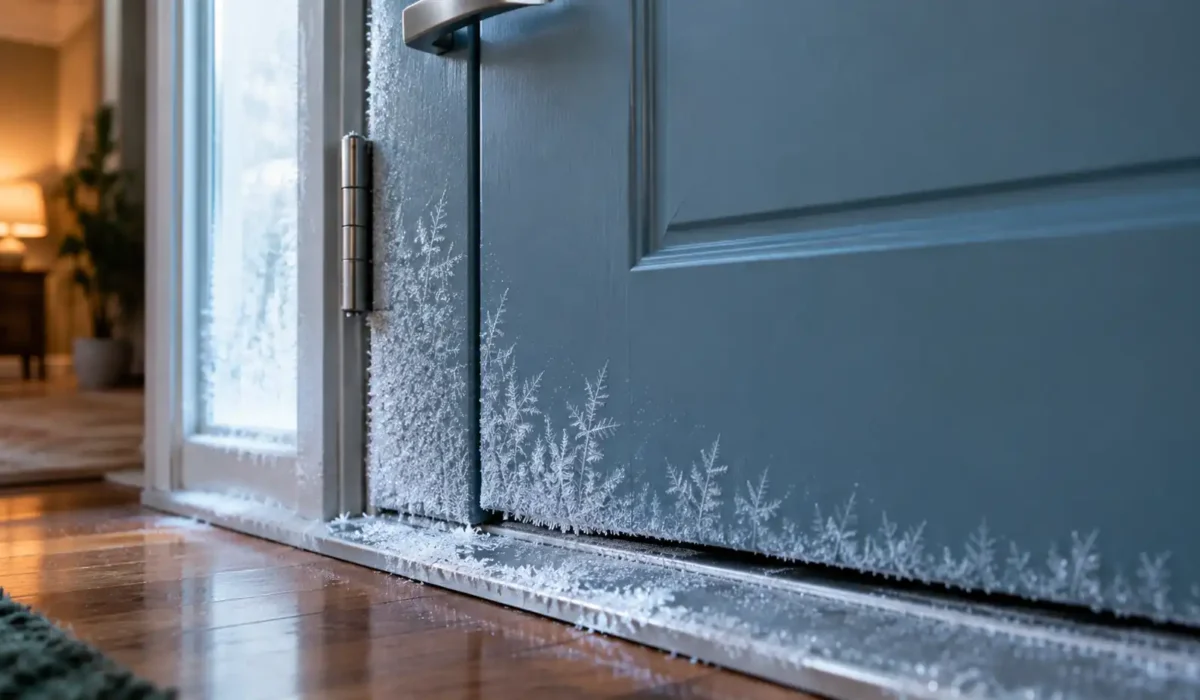
Frost on the inside of a front door is not a door that has failed. It is a door that has become the coldest, most exposed spot in your house. If you have been asking why is there frost on the inside of my front door, the usual answer is that warm, moist indoor air is reaching a surface that sits below freezing.
This guide covers the three common causes, how to read where the frost appears, how to test for air leaks and humidity yourself, and how to stop frost on the front door without damaging it. It also explains when frost on a door frame is more than a cold-snap annoyance.
Why is there frost on the inside of my front door? It starts with a cold surface
Frost needs two things: a surface below freezing and moist air touching it. A door is thin compared with a wall, and it is full of gaps, metal parts and hardware, so it is often the coldest surface in a room.
That explains why frost shows up only when it is very cold outside. The deeper the cold, the lower the temperature of the door’s surfaces, and the more easily indoor moisture freezes on them. In milder weather the same process leaves small water droplets instead, which many people never notice.
Frost on door threshold and frame: when air leaks are the cause
Gaps around the threshold, side jambs and top of a door let cold outdoor air chill the frame and the cavity behind the trim. Moist indoor air then meets that cold surface and freezes. If the frost sits only along the bottom, this is the usual reason for frost on the bottom of a front door frame, and it answers why is there frost on the inside of my front door in many homes.
A building expert answered one homeowner whose new steel door grew frost at the bottom of the interior casing whenever it dropped below about minus 15 degrees Celsius. In that Q&A, the problem was a lack of insulation and sealing under the door sill. The advice was to remove the trim, insulate and air-seal behind it, and add only a small amount of foam under the sill, because too much at once could lift the sill and jam the door.
Steel door frost inside: when the metal is part of the problem
Insulated steel and fiberglass doors have foam cores, but metal edges, aluminum thresholds, hinges and lock hardware can still carry cold straight through. That is why you may see frost on door hinges and the handle on the inside, even when the door slab itself looks dry.
A new front door is not immune. Frost on the inside of a new front door in winter can come from installation gaps or a threshold with no thermal break. Some thresholds use a frost brake, a design that separates the cold outer metal from the warmer inner part to reduce this. If your door has a plain metal threshold, it is worth asking about when you plan upgrades. So if you wonder why is there frost on the inside of my front door even though it is new, the installation and the threshold are the first places to look.
Frost on inside of front door in winter: the humidity link
Air leaks are only half the story when you ask why is there frost on the inside of my front door. Can high indoor humidity cause frost on the front door? Yes. Showers, cooking, drying laundry indoors and humidifiers all add moisture, and in a tight, well-sealed house that moisture has fewer ways out.
A Green Building Advisor thread about frost on the doors and windows of a two-year-old home reached a similar point. Contributors noted that frost means the surface has dropped below freezing, and that tighter houses tend to hold more indoor moisture. If your windows frost up as well, humidity is a likely contributor. Many guides suggest keeping indoor humidity in roughly the 30 to 40 percent range in very cold weather, but an inexpensive hygrometer will show your own number.
Where the frost shows up, and what each spot usually means
1 2 3 4 5 Five spots where frost often forms on the inside of an exterior door.
- 1Top edge: warm, moist air rising and leaking past the header, often a sign of worn weatherstripping.
- 2Hinges: metal hardware conducting cold to the inside.
- 3Handle and lock: metal parts that chill fast, and a place where moisture can freeze the mechanism.
- 4Threshold and bottom of the casing: the most common air-leak spot, and often a cold metal threshold.
- 5Glass panel: glass is often the coldest surface, so it frosts first when indoor humidity is high.
A pattern from my research
Reading Q&A threads and building-science discussions on this, I noticed that many homeowners had a new steel or insulated door put in during summer or fall, and the frost only appeared at the first deep freeze.
The sources disagree on the cause. Some point to missing insulation under the sill, others to the threshold design, and others to indoor humidity. That suggests one door can have more than one cause at the same time.
How to tell if frost on a door is condensation or an air leak
If you are asking why is there frost on the inside of my front door, a few simple tests will point you toward the cause. None of them need tools.
- Try the paper test. Close the door on a strip of paper at several points around the frame. If it slides out easily, the seal is weak there.
- Check for daylight. Have someone shine a flashlight along the edges from outside in a dark room. Light showing through marks a gap.
- Feel for drafts on a windy day by holding your hand near the edges and the threshold.
- Measure your humidity with an inexpensive hygrometer, and note whether your windows frost up too.
- Note where and when the frost forms. A photo each morning during a cold snap shows the pattern.
How to stop frost on front door surfaces: fixes in order
To answer why is there frost on the inside of my front door for good, work from the cheapest and easiest fix toward the more involved ones, and recheck after each change.
- Lower indoor humidity first. Use bathroom and kitchen fans, avoid drying laundry indoors, and check any humidifier setting.
- Replace worn weatherstripping and fit a door sweep or adjust the threshold. Does weatherstripping stop frost on the front door? It helps when air leaks are the cause, but it will not fix frost caused by indoor humidity or a cold metal threshold. A Maryland Energy Administration\u2019s weatherstripping guide explains the common types, and notes that frost can still build up on some aluminum thresholds in extreme cold.
- Seal and insulate behind the casing if you find air coming through, as in the expert advice earlier.
- Ask a door professional about a frost-brake threshold if the metal threshold keeps frosting.
- Wipe away frost and moisture as it melts, so wood and finishes do not stay wet.
If you also have a storm door, frost there can come from moist air leaking past the main door’s weatherstripping, which Family Handyman covers storm door winter prep in this guide. For the rest of your cold-weather jobs, the Seasonal Maintenance calendar and the Maintenance Checklist are good places to start, and the Maintenance Planner can build a reminder schedule for your own home.
Why is there frost on the inside of my front door, and when does it mean more than a cold snap?
A little frost that melts and dries is mostly a nuisance. Frost that returns every day can keep the wood of the frame and casing damp, which over time can damage paint and wood, and may encourage mold. That does not happen in every house, but it is a good reason to fix the cause instead of only wiping the frost away.
Frost can also freeze the lock or latch, or make the door stick. If your front door freezes shut, treat it gently, because the door and glass can be damaged by shortcuts.
| Situation | Do | Don’t |
|---|---|---|
| Melting ice | Use a hair dryer on a low setting or a warm damp cloth | Use a heat gun, a torch or boiling water, which can crack glass and damage finishes |
| Ice on the door or frame | Let it soften, then wipe it gently | Chip at it with a screwdriver or a sharp scraper |
| Stuck door | Free it gradually and check the hinges and latch | Force it open with a hard pull |
| Afterward | Dry the threshold and frame | Leave water pooling on the sill |
Call a professional if the wood feels soft, if you see stains or mold, if the door no longer closes properly, or if drafts continue after you have sealed what you can. The Home Problem Finder can also help you sort out door and moisture symptoms step by step.
Frequently asked questions
Why is there frost on the inside of my front door?
Warm, moist indoor air is touching a door surface that has dropped below freezing. The cold may come from gaps around the threshold and frame, from metal parts like a threshold or hinges, or from high indoor humidity. Often it is a mix. Is it normal to have frost on the inside of a door?
It is common during very cold weather, but common does not mean you should ignore it. Frost that appears only briefly during a cold snap is less worrying than frost that returns daily, which suggests an air leak or a moisture problem. Why does my metal door get frost on the inside in winter?
Metal conducts cold well. Even an insulated steel door has metal edges, a threshold and hardware that can carry the cold through, so those spots chill first and moisture freezes on them. Can frost on a door frame cause rot?
It can contribute if the frame stays damp for long periods. Occasional frost that dries quickly is less likely to cause problems, but repeated moisture on wood is worth fixing, and soft or stained wood needs a professional look. How do I thaw a frozen door safely?
Use a hair dryer on low heat or a warm damp cloth, and be patient. Do not use a heat gun, a torch or boiling water, and do not chip at ice with sharp tools.
Before you wipe the frost away
Frost tells a story about where the cold gets in and where the moisture comes from, but only until you wipe it off.
The next time you wonder why is there frost on the inside of my front door, look at where the frost starts before you clean it, and ask yourself: does it begin at the threshold, the hinges or the glass?
Not sure what your home needs?
Build a free, personalized maintenance plan in under 2 minutes.
Build My Home PlanRelated Articles
 Moisture & Basement
Why Does My House Smell Musty When It Rains? 7 Real Causes & Fixes
Why does your house smell musty when it rains? It usually means moisture is sneaking in somewhere. Here…
 Moisture & Basement
Why Is There Frost on the Nails in My Attic? (What It Means and What to Do)
You climb into the attic on a freezing morning, shine a flashlight at the roof deck, and every…
 Moisture & Basement
Why Does My Sump Pump Keep Running? (7 Real Causes)
Picture this: it’s late evening, rain is drumming on the windows, and from somewhere below you hear it…