Why Is There Frost on the Nails in My Attic? (What It Means and What to Do)
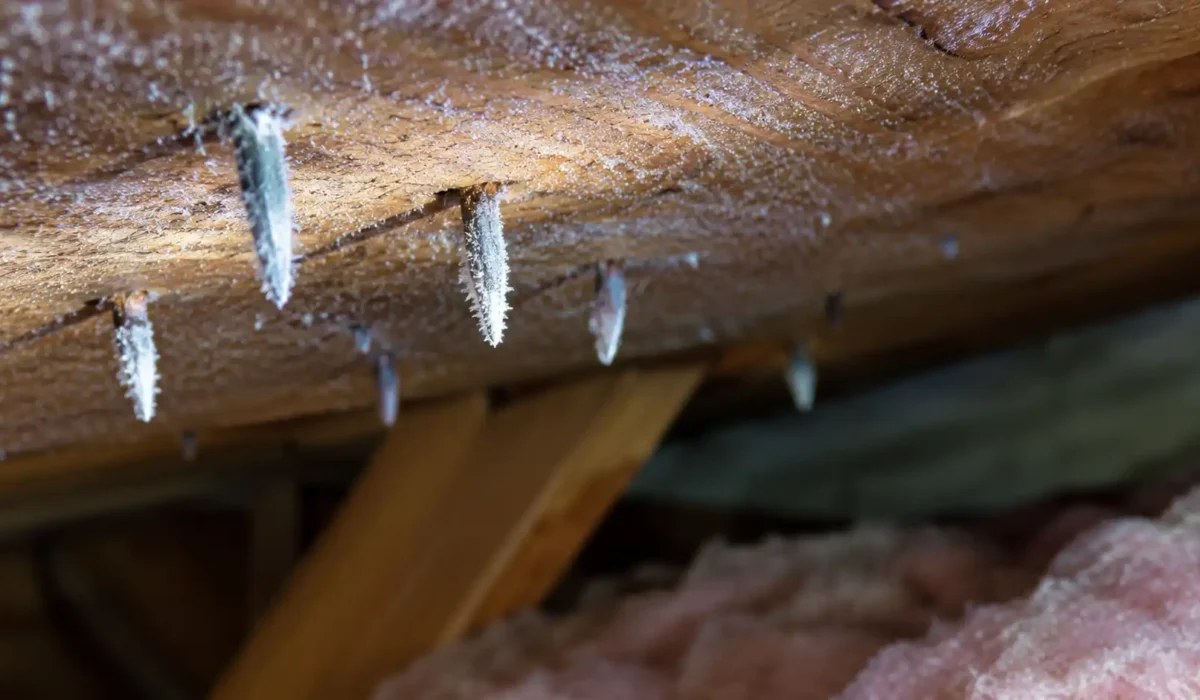
You climb into the attic on a freezing morning, shine a flashlight at the roof deck, and every nail tip is furred with white frost. The question is obvious: why is there frost on the nails in my attic? Most people assume the roof is failing, and in many homes the roof is not the real problem at all.
This guide explains what that frost is telling you, where the moisture comes from, how to separate it from a genuine roof leak, and what to fix first. It stays with things a homeowner can check and do, and it points out where a professional should take over.
What frost on roof nails in attic spaces actually means
Roofing nails are driven through the roof deck, so their tips poke into the attic. Metal conducts cold well, which means those tips sit close to the outdoor temperature in winter. When warm, humid air from the living space drifts upward and touches them, the moisture condenses and then freezes. Frost is simply moisture you can see.
Frost that stays frozen does little harm. The trouble starts when it melts. Meltwater soaks insulation, leaves stains, feeds mold on the underside of the roof deck, and over many winters can weaken the wood. Seeing frost on attic nails only on the coldest days is common, because the colder the roof deck gets, the easier it is for moisture to freeze there.
How it shows up depends heavily on where you live. Treat the table below as a general pattern, since local conditions and house construction change the details.
| Climate type | What you may see | What it usually points to | When to check |
|---|---|---|---|
| Long, very cold winters | Frost on nails and sheathing through much of the season | Moisture freezing in place, then releasing a lot of water at the first thaw | After cold snaps and again at the first warm-up |
| Cold winters with frequent thaws | Frost that builds, melts and returns | Repeated wetting: drip marks, damp insulation, ceiling stains during thaws | After any warm spell following hard frost |
| Mild or humid winters | Little or no frost, but rusty nail tips and dark stains around them | Condensation without freezing, sometimes with musty smells | Look for rust, stains and damp insulation instead |
Where the moisture comes from: attic condensation in winter
Frost needs a supply of moist air. In most cases that supply is your own house. Warm air carries water vapor, and it tends to rise and escape at the top of the home, which pulls more vapor into the attic. The usual suspects are:
- Gaps between the living space and the attic, often called attic bypasses. Common spots are around recessed lights, the attic hatch, chimney and plumbing chases, and holes where wires pass through the ceiling.
- Bathroom fans or a dryer vented into the attic instead of outside. This one is easy to check and easy to fix.
- High indoor humidity from humidifiers, indoor laundry drying and long hot showers. Home inspectors often report frost in attics of homes running whole-house humidifiers, so this is worth a look.
- A damp basement or crawl space, since moisture can travel upward through the house.
A bathroom fan that dumps steam into the attic is a classic case of frost in attic spaces. The moisture has a short route to the coldest surface in the house, and every shower adds to it.
Frost or a roof leak: how to tell them apart
Because melting frost can leave a stain that looks like a leak, people often call a roofer first. The clues below help you decide which one you are probably dealing with. Both can exist together, so treat this as a guide, not a verdict.
Points toward frost or condensation
- Stains appear during cold-then-warm weather, not just after rain
- Drip marks line up with nail tips
- Damp spots appear in many places, not one
- Frost is visible on cold mornings and gone by afternoon
Points toward a roof leak
- Stains track with rainfall
- One concentrated wet spot near a vent, flashing or valley
- Water trails down a rafter from a single point
- Missing or damaged shingles outside
What kept repeating in my research
While reading through home inspector discussions and building-science write-ups on this topic, one pattern came up again and again. Homeowners called a roofer first, the usual suggestion was more roof vents, and the inspectors who looked later often traced the moisture to indoor air leaking up or a fan venting in the wrong place.
The sources do not fully agree on emphasis. Some stress airflow through the attic, others put air sealing first and warn that adding vents without fixing leaks can backfire. The safest reading is that sealing and moisture control usually come first, with ventilation checked afterward.
If the symptom is a stain you cannot explain, the Home Problem Finder can help you sort ceiling and moisture symptoms step by step before you decide who to call.
How to check your attic for frost safely
You do not need tools for a basic look, but you do need to be careful. Attic floors are often just drywall resting on joists, and a misplaced step can put a foot through the ceiling.
- Go up on a cold morning, before the sun warms the roof. Frost is easiest to see then.
- Start from the hatch with a bright flashlight and look before you step in.
- If you enter, stay on the joists or on boards laid across them. Never step on bare drywall between joists.
- Wear a dust mask and gloves. Insulation fibers and dust irritate skin and lungs.
- Look at the nail tips, the roof deck near the eaves, and the area around vent pipes and the chimney.
- Note how widespread the frost is, whether any wood looks dark or stained, and whether the insulation looks wet. Take photos.
- Follow the bathroom fan and dryer ducts and confirm they end outside the house.
Do not go into an attic with a sagging ceiling below, signs of damaged wiring, or large areas of dark growth. Photograph what you can see from the hatch and contact a qualified professional instead.
How to stop frost in attic spaces: what to fix first
There is rarely a quick cure for a frosty attic, because the real fix is reducing how much moist air gets in. A sensible order of work looks like this:
- Stop the obvious moisture sources. Make sure bathroom fans and the dryer vent outdoors, and consider turning a humidifier down during very cold weather. If the basement or crawl space is damp, deal with that too.
- Seal air leaks between the living space and the attic. Weatherstripping the attic hatch is a simple start. Around chimneys, flues and recessed lights, use only materials approved for the heat and check fixture labels. If you are unsure, hire someone who does air sealing.
- Check attic ventilation after sealing. Make sure insulation is not blocking the soffit vents at the eaves.
- Do not rely on insulation or extra vents alone. Adding more roof vents without fixing leaks does not always stop attic frost, and extra insulation on top of open gaps usually will not solve a moisture problem.
Never cover or block existing attic vents, and keep insulation clear of any flue or heat-producing fixture.
Frost in attic melting and dripping: the damage to watch for
The visible signs of melting frost are wet insulation, ceiling stains from melting attic frost, and dark growth on the underside of the roof deck. In some homes the water also shows up around ceiling light fixtures and bathroom fans.
If water is dripping from a light fixture, stop using that fixture and switch off its circuit at the panel. Water and electricity do not mix, and an electrician should look at it before it is used again.
Over many winters, repeated wetting can cause plywood roof decking to delaminate, which weakens it. That is why it is worth acting on a frosty attic instead of waiting to see whether it goes away.
Call a professional if the decking feels soft or spongy, mold covers a large area, the ceiling is sagging, water is near wiring, or you cannot find where the moisture is entering. A home inspector or an air-sealing specialist can trace leaks that are hard to spot yourself.
An attic check fits naturally into a fall routine. The Seasonal Maintenance calendar and the Maintenance Checklist list the other cold-weather jobs worth doing in the same weekend, and the Maintenance Planner can build a reminder schedule for your own home.
Frequently asked questions
Is it normal to have frost in the attic?
It is common in cold climates, but common does not mean harmless. Frost shows that moist air from the house is reaching a cold surface. A little frost on a very cold day is less worrying than heavy frost across the roof deck, which suggests a larger moisture or air-leak problem. Does frost in the attic mean my roof is leaking?
Not necessarily. Melting frost can leave stains that look like a leak. If stains follow cold-then-warm weather and line up with nail tips, condensation is more likely. If they track with rainfall and sit under a vent or flashing, a roof leak is more likely. Does attic ventilation stop frost?
It can help, but it is rarely the first fix. Sources disagree on emphasis, and adding vents without sealing air leaks does not always stop frost. Most guidance starts with controlling moisture and sealing leaks, then checks ventilation. Can attic frost cause mold?
It can contribute. When frost melts, the wood and insulation stay damp, and prolonged dampness can allow mold to grow on the roof deck. Large areas of dark growth are a reason to call a professional rather than handle it yourself. Can a humidifier cause frost in the attic?
It can add to the problem. Higher indoor humidity means more vapor leaking into the attic, and inspectors often report frost in homes with whole-house humidifiers. Turning the setting down during very cold weather is a reasonable first step.
Two ways the next cold morning could go
Scenario AYou check the nail tips now, confirm the fans vent outside, and seal the attic hatch before the first hard freeze.
Scenario BYou wait, and the first thaw leaves a brown stain on the bedroom ceiling that you assume is a roof leak.
When you last went up to your attic, did you look at the nail tips and the duct ends, or only at how deep the insulation was?
Not sure what your home needs?
Build a free, personalized maintenance plan in under 2 minutes.
Build My Home PlanRelated Articles
 Moisture & Basement
Why Does My House Smell Musty When It Rains? 7 Real Causes & Fixes
Why does your house smell musty when it rains? It usually means moisture is sneaking in somewhere. Here…
 Moisture & Basement
Why Is There Frost on the Inside of My Front Door? (Causes and Fixes)
Frost on the inside of a front door is not a door that has failed. It is a…
 Moisture & Basement
Why Does My Sump Pump Keep Running? (7 Real Causes)
Picture this: it’s late evening, rain is drumming on the windows, and from somewhere below you hear it…